


You've probably heard about chestnuts roasting on an open fire, but did you know that you can roast chestnuts at home?
Learn how to roast chestnuts in the oven, and find out how to pick, prep, and store these tasty snacks.

Not Ready to Cook?
(You can easily unsubscribe at any time)
Jump to:
Cook's Notes
If you've never had the opportunity to try freshly roasted chestnuts, you're in for a treat. They're delicious!
Sure, they might require some effort to prepare and cook, and you might encounter a few stubborn or spoiled nuts along the way, but trust me, it's all worth it.
I've done my best to provide you with all of the information that you need to successfully roast chestnuts at home.
What Are Chestnuts?
Chestnuts are the edible nuts of trees in the Castanea genus, which includes:
- Asian chestnut varieties
- American chestnut (Castanea dentata)
- European chestnut (Castanea sativa)
These nuts grow inside spiny burs that split open when the chestnuts are ripe. They have a dark brown shell with a pointed end. This shell is inedible and must be removed before eating.

Chestnuts (also called Sweet Chestnuts) are especially popular in the autumn and winter months, often associated with Thanksgiving, Christmas, and New Year's celebrations.
Their versatility, natural sweetness, and warm, nutty flavour make them a beloved ingredient worldwide.
⚠️ Food Safety
Do Not Confuse Sweet Chestnuts with Horse Chestnuts
While sweet chestnuts look similar to horse chestnuts, they are not the same plant.
Horse chestnuts (sometimes called conkers or buckeyes):
- Are round and do not have a pointed end
- Are toxic to humans and should never be eaten
Where to Buy Chestnuts
Fresh raw chestnuts can usually be found in groceries and farmers' markets around Thanksgiving in Canada and the United States.
Here in Southern Ontario, they're generally available from October through December. In my area, most of the chestnuts on grocery store shelves are imported from China or Italy.
The flavour may vary slightly between the two, but I honestly can't say I prefer one over the other.

Buy Local If You Can
If you have the option to buy locally grown chestnuts, go for it! To locate fresh chestnuts, reach out to your local farmers or explore nearby farmers' markets (like the Evergreen Brickworks Market in Toronto).

What to Look For When Buying
If your grocery store sells loose chestnuts in bins, you can pick through them to find the best ones.
Check the Shell Quality
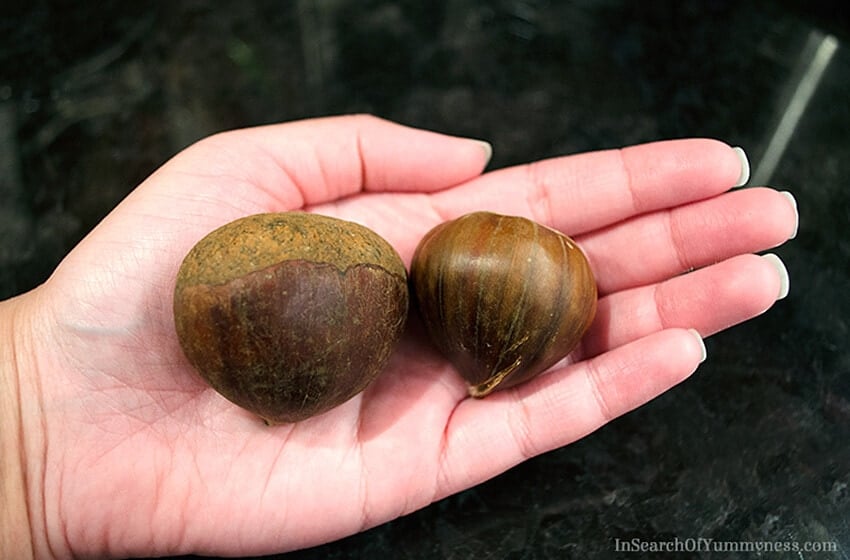
- Look for a glossy, tough exterior with a rich brown colour.
- Avoid dull, wrinkled, or cracked shells.
- Cracks can expose the chestnut to mould or pests, so leave those behind.
Do the Freshness Test
- Choose heavy chestnuts: They should feel weighty for their size.
- No rattling: If they rattle when you shake them, the inside has dried out.
- Check for air pockets: Press the shell gently. If you feel "give" or a hollow spot, the nut is likely old.
Pick the Right Packaging
- Choose loose chestnuts or those sold in mesh bags (they allow airflow).
- Avoid sealed plastic bags without perforations, as chestnuts can go mouldy quickly without ventilation.
- If you buy pre-packaged chestnuts, check for cracks, mould, or blemishes and discard any that look bad.
Store unshelled raw chestnuts in a cool, dry place until you're ready to cook them. Because they have a short shelf life, plan to roast them soon after purchasing.

Did You Know?
Finding fresh chestnuts in Southern Ontario can be difficult due to a tragic piece of history. In the 1900s, chestnut blight wiped out 99% of our chestnut trees. The American chestnut is now considered critically threatened in the wild, with restoration projects underway.
How to Prepare Chestnuts for Roasting
Getting chestnuts ready for the oven is straightforward once you know the steps.
Step 1: Wash Them
The first step is to give your chestnuts a good wash.
It might seem unnecessary since you won't eat the shell, but you'll be handling it as you peel them.
Clean shells help keep the edible part safe from contaminants.
Step 2: Score the Chestnuts
Once clean and dry, your chestnuts are ready for scoring.
Scoring means making a shallow incision in the shell to allow steam to escape during cooking.
This allows steam to escape during the cooking process.

How to Score Chestnuts:
- Place a chestnut flat-side down on a cutting board.
- Use a sharp paring knife to cut a slit into the shell.
- Cut an X on the top or a single line across the shell.
- Try to cut all the way through the shell to help it curl back during roasting. This will make peeling easier.
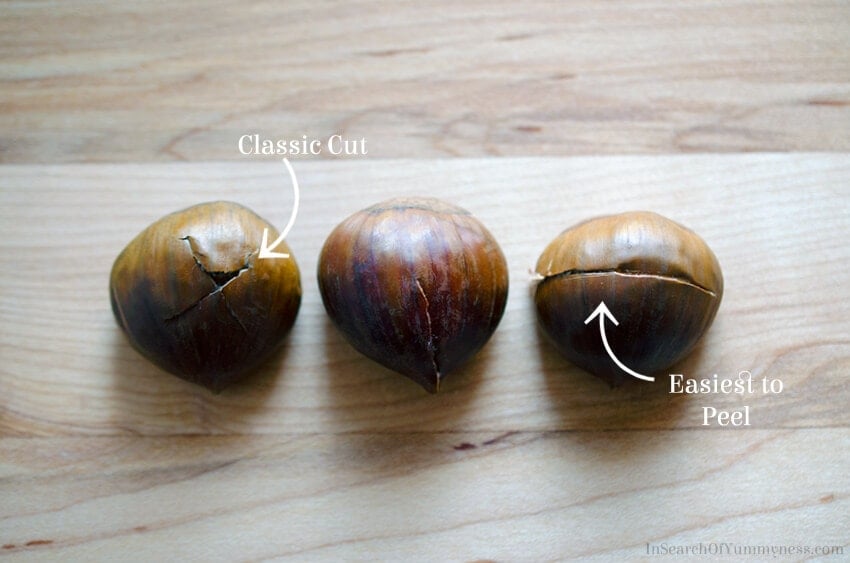
Discard any chestnuts that are mouldy, rock-hard, or have an unusual smell.
💡 Tip: I now use a curved paring knife, but a straight one works too. If you're not comfortable with knives, try a chestnut scoring tool.

⚠️ SAFETY WARNING:
Chestnuts will explode if not scored (just like baked potatoes). Always score them before roasting!
How to Roast Chestnuts in the Oven
Roasting chestnuts in the oven is simple:
- Place prepared chestnuts in a single layer on a sheet pan, with the X facing up.
- Roast at 425°F (220°C) until they smell sweet and nutty and the shells start to peel back.
- Chestnuts are ready when they smell nutty and feel hot to the touch.
If your chestnuts seem underdone, return them to the oven for a few more minutes. Make sure to start peeling them while they are still warm.
How Long to Roast Chestnuts
- Large imported chestnuts usually take 15-20 minutes.
- Smaller chestnuts typically take 7-10 minutes.

Make a Test Batch!
Every oven is different, and cooking times can vary. Start with a few chestnuts so you don't risk ruining the whole batch.
How to Peel Off the Shells
Peeling chestnuts is easiest when they're still hot. As they cool, the inner skin (called the pellicle) starts to cling tightly to the nut, which makes peeling much harder.
Peel While Warm
- Wrap the roasted chestnuts in a clean kitchen towel for 5 minutes. This traps steam and helps loosen the skins.
- While they're still warm, peel off the outer shell and the thin inner membrane.
If the skins are stubborn, return the chestnuts to the oven for about 5 minutes to soften them again. Older chestnuts tend to have tougher skins.
My Tip for Handling Hot Chestnuts
I use an old kitchen towel to protect my hands from the heat.
I take one end of the towel, cover my left hand, and place the chestnut in that hand.
Then, I use the other end of the towel in my right hand to peel off the shell.

Not only does the towel protect my hands from the heat, but I'm less likely to cut myself with the sharp chestnut shells this way, too.
I can't tell you how many times I've cut my fingers on sharp bits of shells. It's not fun!
Common Problems and Solutions
Some people recommend soaking chestnuts before roasting them, which allows the meat inside to steam.
Personally, I haven't found that soaking makes a big difference, so I don't do it.
If you don't cut a slit into the shell before cooking, your chestnuts are likely to explode.
If you did cut a slit, and they still exploded, your cuts may have been too small or too shallow.
And sometimes, you'll get the odd chestnut that decides to explode anyway!
Chestnuts are done when they smell sweet and nutty, feel hot to the touch, and the shells start to peel back where you scored them.
If you're not sure, peel one open and check. The inside should be tender and slightly soft.
This often happens if the chestnuts are undercooked or stale.
Many factors affect the ease of peeling a cooked chestnut. Locally grown chestnuts are the easiest to peel because they're still very fresh.
Imported chestnuts can sometimes be old or stale by the time they reach our grocery shelves.
Also, chestnuts are easiest to peel while hot. The papery skin gets more difficult to remove as the chestnuts cool down.
Solution: Return them to the oven for 5 minutes to reheat. This usually loosens stubborn skins.
How to Eat Roasted Chestnuts
When it comes to enjoying roasted chestnuts, I like to eat them like popcorn.
Instead of pouring salt and butter over a bowl, I dip each chestnut in melted butter and sprinkle a little salt on top.
Their mild, sweet, nutty flavour and tender texture make them easy to snack on (and hard to stop eating!)

Ways to Use Roasted Chestnuts
You can use cooked chestnuts in savoury recipes like:
Or sweet preparations like:
How to Store
Roasted chestnuts have the best flavour and texture when they're freshly cooked, so they're best enjoyed hot out of the oven.
However, you can store cooked chestnuts in the fridge or freezer to use later.
How to Store Raw Chestnuts
Store unshelled raw chestnuts in a cool dry place until you're ready to cook them.
They have a relatively short shelf life, so plan to roast them within a few days of purchasing.
How to Freeze Raw Chestnuts
If you need to store raw chestnuts for later use, you can freeze them.
- Wash and dry fresh chestnuts.
- Pack them into airtight, freezer-safe bags or containers.
- Remove as much air as possible.
- Freeze for up to 12 months.
- To defrost, thaw in the fridge overnight.
How to Store Cooked Chestnuts in the Refrigerator
- Peel the roasted chestnuts and let them cool completely.
- Place them in an airtight container.
- Refrigerate for 2 to 3 days.
Reheat in a skillet with butter before serving.
How to Store Cooked Chestnuts in the Freezer
- Peel the chestnuts and let them cool completely.
- Arrange them in a single layer on a parchment-lined sheet pan.
- Freeze until solid, then transfer to a freezer-safe container or bag.
- Store for up to 3 months.
To defrost, thaw overnight in the fridge, then reheat gently in a skillet.

⚠️ CAUTION:
Do not microwave dry chestnuts. They can catch fire because they've lost moisture during roasting. Always reheat gently in a skillet with butter.

What to Eat with Chestnuts
Although roasted chestnuts are a delicious addition to a variety of recipes, many people enjoy snacking on them as they are.
Since chestnuts are a starchy food (and can be salty if you serve them with salt and butter), I like to pair them with something flavourful and sweet like apple cider, spiced hot chocolate or eggnog.
I hope this guide to roasting chestnuts has been helpful. If your first batch doesn't turn out the way you expect, don't be discouraged.
Chestnuts vary in size, and some have membranes that run through the flesh, which makes peeling tricky. Everyone buys a bad batch now and then.
Start with small batches and adjust based on the chestnuts available in your area.
Once you learn how to roast chestnuts in your own oven, you'll look forward to making them every holiday season.
If you have any tips or tricks for roasting chestnuts, please leave them in the comments below. I'd love to hear from you!
For more cooking guides, check out my cooking basics page.
Recipe Card

Oven Roasted Chestnuts
Ingredients
- 1 pound chestnuts
- 1 teaspoon salt
- 1 tablespoon salted butter, melted (optional)
Equipment
- Pairing Knife, (or a chestnut scoring tool)
- Cutting Board
- Baking Sheet (Half Sheet Pan)
- Towel
Instructions
- Preheat oven to 425°F.
- Wash and dry your chestnuts.
- Place chestnuts flat side down on a cutting board. Use a sharp knife to carefully cut a slit or an "x" into the top of each chestnut, or use a chestnut scoring tool.
- Place scored chestnuts in a single layer on a baking tray, with the x facing up.
- Roast chestnuts in the centre of the oven for about 15-25 minutes*. Chestnuts are done when they smell nutty and they are hot to the touch. The shells may begin to curl up as well.
- Remove chestnuts from oven, and allow to cool enough to handle them. Peel warm chestnuts using fingers and a tea towel, working quickly. Discard any chestnuts that are mouldy on the inside.
- Serve shelled chestnuts with salt and melted butter, if desired.
Want More Recipes Like This One?
(You can easily unsubscribe at any time)
Notes
Please read the full blog post for all of my tips, variations, and recommendations for this recipe.
Nutrition
Nutritional information is an estimate provided as a courtesy and will vary based on the specific ingredients used. For exact values, use your preferred nutritional calculator with the products you're using.
Private Notes
Have you made this recipe?
Let us know how it turned out in the comments!This article about how to roast chestnuts was published on November 18, 2020. It has since been edited for accuracy, and new content has been added.
About Shareba
Shareba Abdul is a recipe developer and food photographer with a Culinary Arts certificate from George Brown College and 15+ years of experience creating and testing recipes for home cooks. She is also a member of the International Association for Culinary Professionals and tests every recipe on this website in her own kitchen. Learn more →

Diane says
That is the most amazing, informative post. Can’t wait to try this! Thanks so much! Diane FBC Kitchen Bliss
Shareba says
Thanks so much Diane! I'm hoping that people find it useful!
Lily {Gastro Senses} says
Wow this is really unique! Thank you for the detailed recipe!
Shareba says
Thanks for reading and taking the time to comment! I know it's a long one 🙂
Charlotte says
I always see these at the grocery store but am always too intimidated to cook them. Thanks for the tips for roasting them! I'll have to pick some up next time I see them.
Shareba says
Just be careful when you're scoring them, and you should be ok! Let me know how they turn out 🙂
maria says
I have always had a fascination with chestnuts. In fact, growing up Italian meant my whole family was obsessed with chestnuts! We would use them in baking, cooking and for snacking. In fact, i just roasted a few pounds in order to make one of my favorite Christmas desserts. Great post, thanks for sharing the love on chestnuts 🙂
Gabrielle @ eyecandypopper says
what?! oh my gosh, I've never roasted chestnuts but this is awesome! I kind of want my own chestnut tree now..... 🙂
Bernice says
Years ago we tried to roast whole chestnuts in our fireplace. After cleaning up the mess that ensued we forgot about making them. Lately I've been wanting to have another go at them so I'm very happy to find your post. Thanks Shareba!
Shareba Abdul says
I hope it's helpful Bernice!
suki says
I have never cooked them at all. Never thought of making anything with this 🙂 Thank u!!!! for the post shareba
Shareba Abdul says
I hope you try them Suki!
jess meddows says
This was a really fascinating post, Shareba. I've never known how to cook chestnuts and found it really interesting (also liked the what not to do sections with the old nuts and burning the chestnuts). I'm now off to google exploding chestnuts, as I'm a little curious... hehe.
Shareba Abdul says
Ha! If you find any good videos, be sure to share them with me 😛