

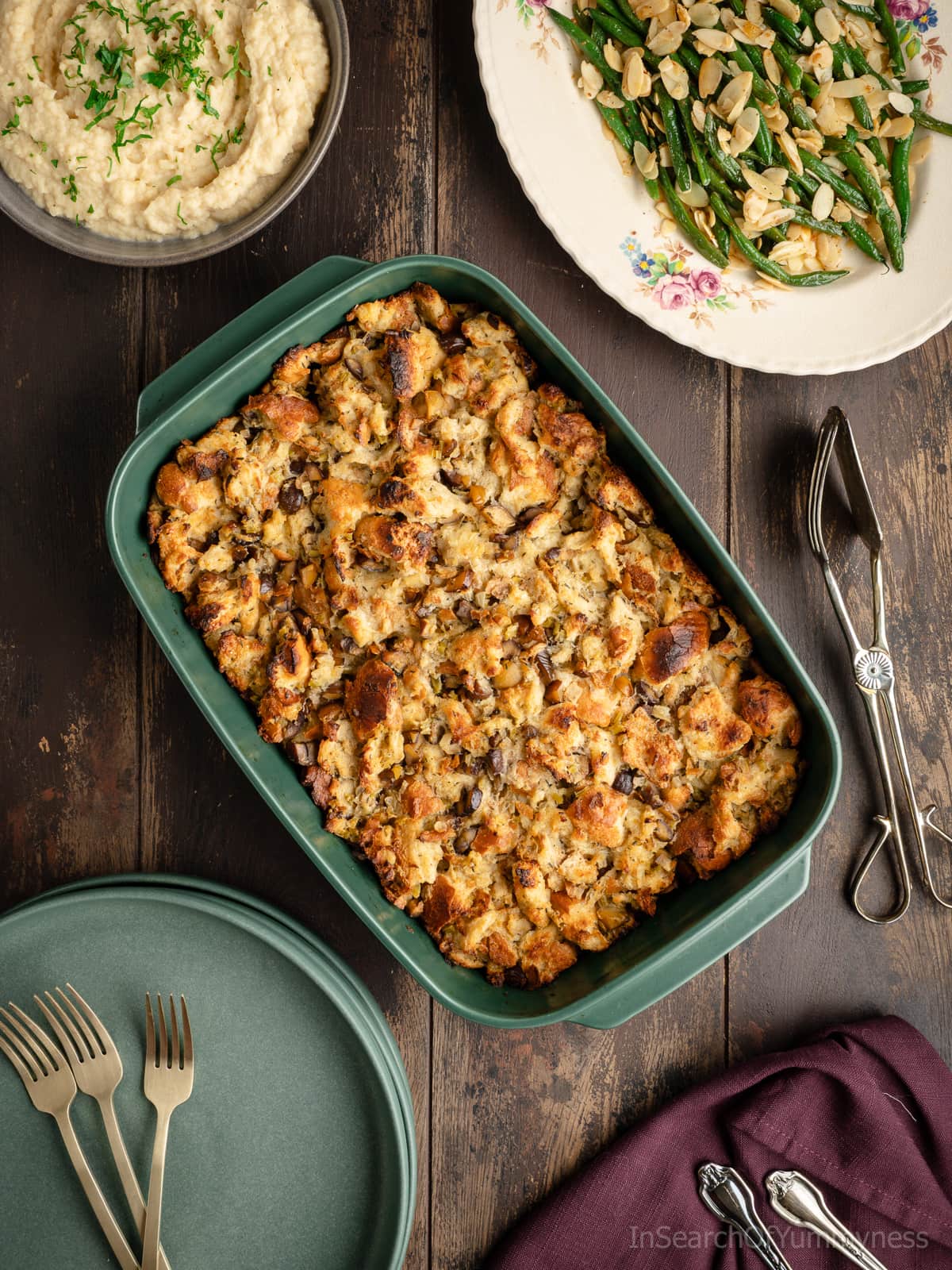
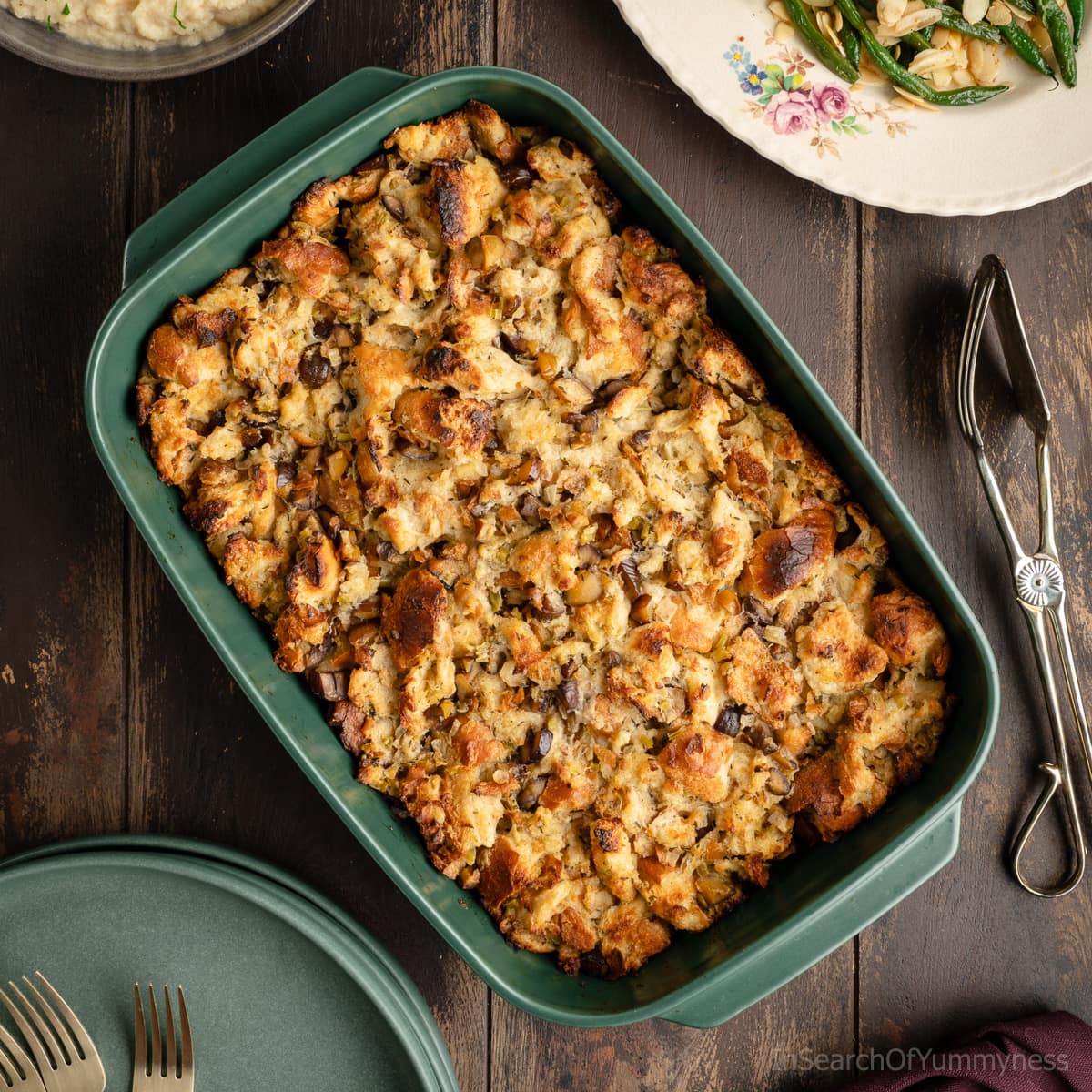
This buttery chestnut stuffing is a crowd-pleasing holiday recipe that you'll keep coming back to.
You only need a few simple pantry ingredients: store-bought chestnuts (or freshly cooked, if you prefer), basic vegetables and seasonings, broth, butter, two eggs and a nice loaf of white bread.
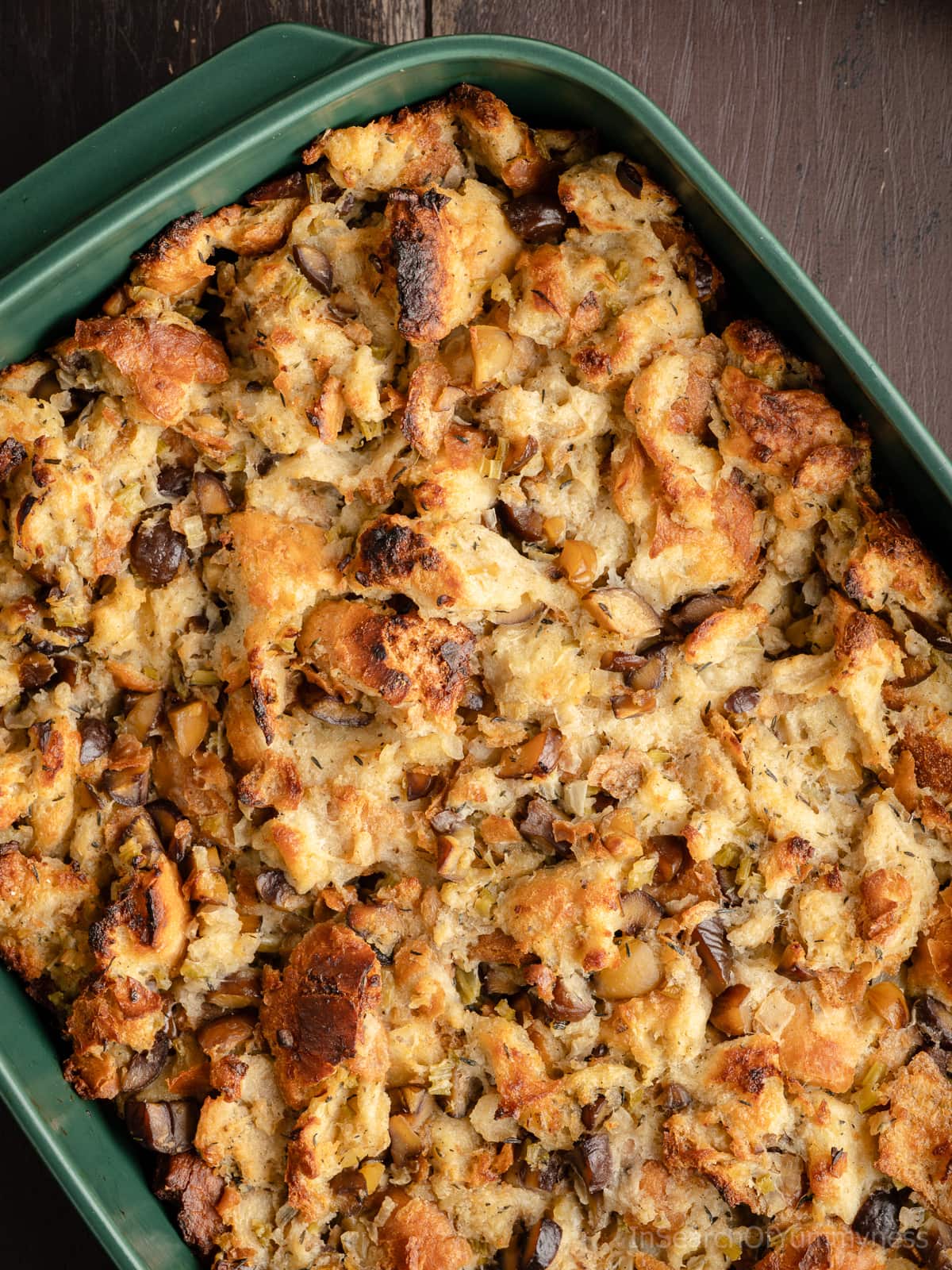
The result is a warm, savoury stuffing that gets a bit of sweetness from the nutty chestnuts. It's a classic recipe that is welcome on any holiday table.
Recipe Highlights
- Servings: Makes 12 servings
- Time Commitment: 1 hour to dry the bread, 25 minutes of preparation time, and 45 minutes of baking.
- Effort Required: Easy! Cook the vegetables, toss everything together, and bake.
- Special Equipment: Large skillet, large mixing bowl, and a 9x13" baking dish.
- Dietary Notes: Contains dairy and eggs.
Not Ready to Cook?
(You can easily unsubscribe at any time)
Jump to:
Ingredients and Substitutions
Here's what you'll need to make this chestnut stuffing recipe.
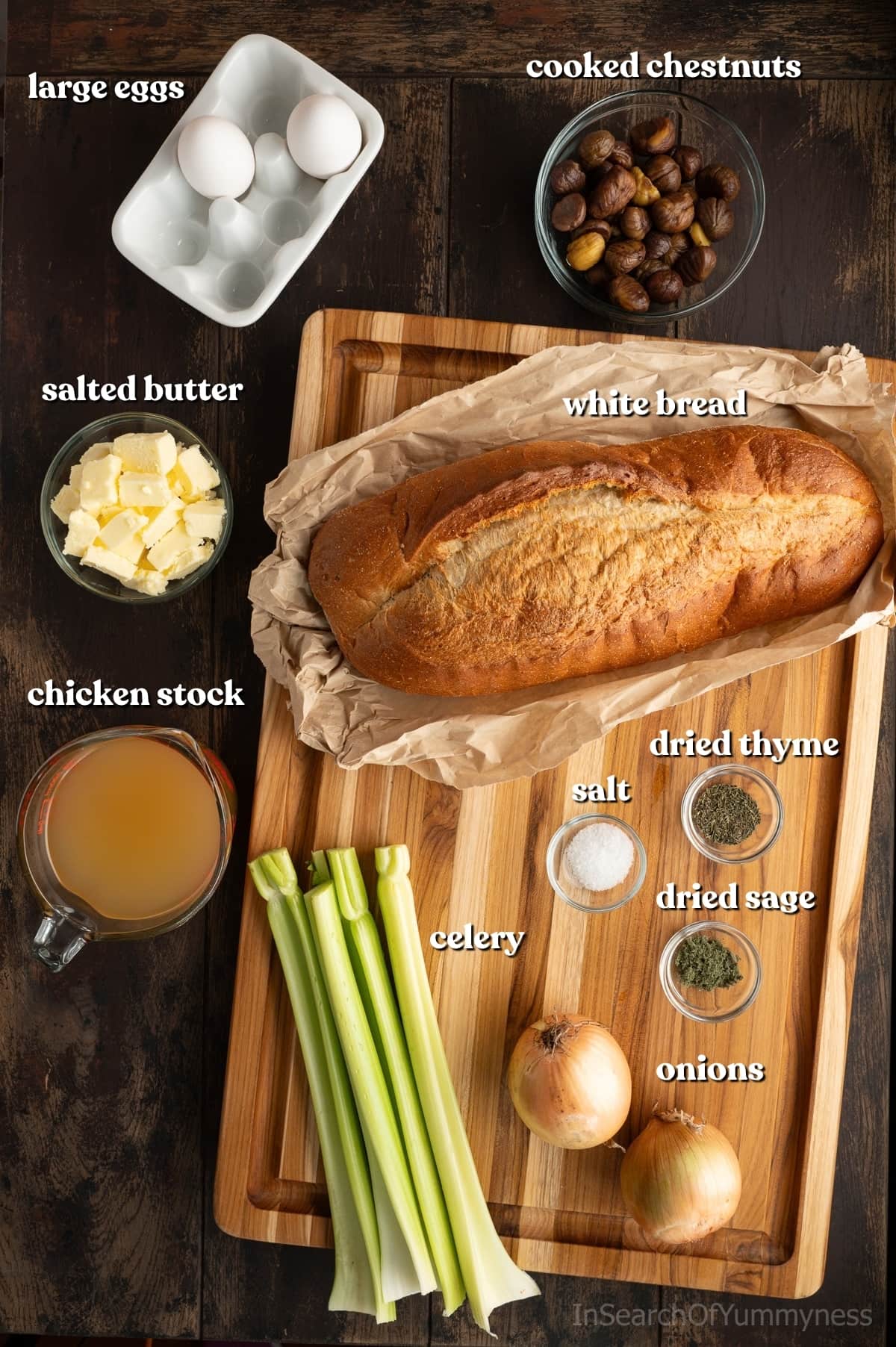
- Crusty White Bread: Look for a loaf of bread that is rustic and hearty. I used an Italian loaf. Don't use pre-sliced sandwich bread or cornbread as it will become too soggy.
- Salted Butter: There is quite a lot of butter in this recipe, but that's part of what makes it so tasty. If you want to substitute olive oil for the butter to cook the vegetables, you can. However, the reserved cold butter on top is what gives the stuffing that golden, slightly crisp texture.
- Onions: I used regular yellow cooking onions, but white onions would also work.
- Celery: Don't be tempted to skip the celery; this is what gives that classic savoury stuffing flavour to this recipe.
- Dried sage: This is a classic stuffing herb. Substitute with 1 tablespoon of fresh sage.
- Dried thyme: Pairs well with sage but can be omitted. Substitute with 1 tablespoon of fresh thyme.
- Cooked Chestnuts: This recipe uses sweet chestnuts, which are not the same as water chestnuts. I used vacuum-packed chestnuts when I developed this recipe, because fresh chestnuts are hard to find year-round in Canada. These chestnuts are softer and sweeter than freshly cooked chestnuts. If you'd prefer to use fresh chestnuts, you'll need to cook them ahead of time. Here's how I roast chestnuts in the oven.
- Eggs: I used two large eggs. These help the stuffing to hold its shape when baked.
- Chicken Broth: The broth prevents the stuffing from becoming too dry. Substitute with vegetable broth.
This recipe has not been tested with all possible substitutions or variations. Making changes may alter the taste, texture, or overall outcome. If you try a different ingredient, please share in the comments!

See the recipe card for the complete ingredient list and recipe instructions.
Variations
This recipe is delicious as written, but you can easily customize it to make it your own.
- Make it spicy: Add 1 finely chopped red chili (seeds removed for less heat). Stir this in with the celery.
- Swap the nuts: Don't have chestnuts? Try chopped pecans or hazelnuts instead.
- Add some sweetness: Dried cranberries or dried cherries add little pops of colour and sweet, tangy flavour. Add them to vegetables cooking in the butter right before adding everything to the dry bread.
Stuffing or Dressing?
I know that some of you will point out that this is technically a "dressing" and not a "stuffing", since it's baked in a dish rather than inside a bird. You're not wrong!
The term "dressing" seems to be regional, though. Here in Ontario, Canada, most of us refer to this baked dish as "stuffing".
Why I Make This Recipe
I started making a version of this stuffing years ago, adapted from Bon Appétit's old Stuffing Matrix article (which I can no longer find online).
The article outlined a bunch of options for breads, aromatics, meats, herbs and deglazing liquids, and I chose my favourites and made my own stuffing recipe. I've been making that recipe for my family for years.
Over time, I simplified the recipe to save time. I removed the deglazing step, since I never added meat to my skillet anyway. I started making it with fewer ingredients, too. It became one of my foolproof Thanksgiving and Christmas side dish recipes.
(Except for the year when I bought a pre-seasoned loaf of bread from my local grocery store that was labelled "stuffing bread," and the stuffing ended up having a horrible artificial flavour...)
I decided to add chestnuts to the recipe after receiving many emails from readers looking for ways to use up the chestnuts they cooked from my guide to roasting chestnuts.
I have developed this recipe to work with vacuum-packed chestnuts as well, since fresh chestnuts are only available here in Ontario for a brief window in autumn.
How to Make Chestnut Stuffing
This recipe isn't difficult to make, but it does take some time. I'll share some tips for preparing this in advance below.

Step 1: Tear the loaf into 1-inch pieces and spread them out on a baking sheet. Bake at 200°F (95°C) for about 1 hour.
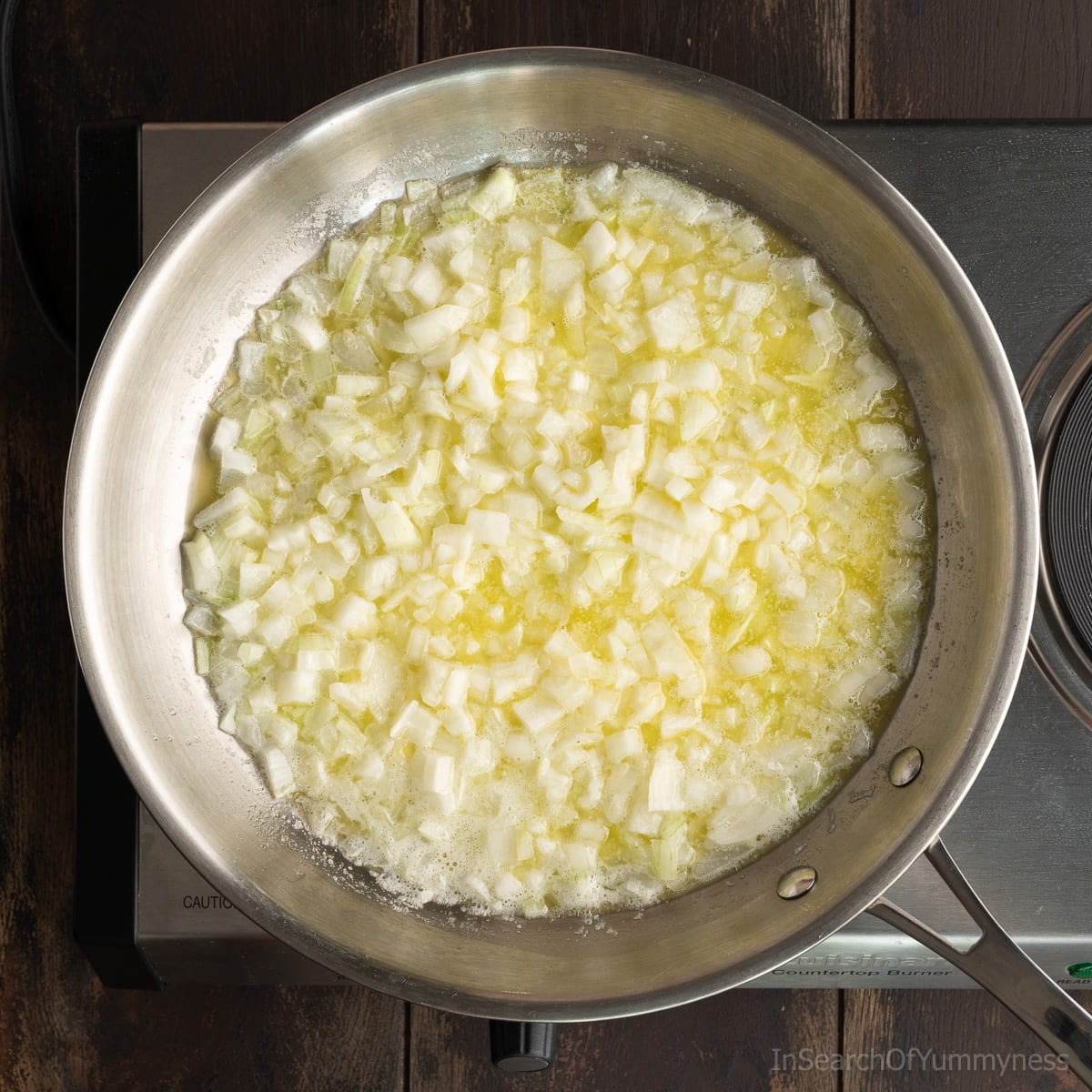
Step 2: Melt ½ cup of butter in a large skillet over medium heat. Add the onions, season with salt, and cook for about 5 minutes.
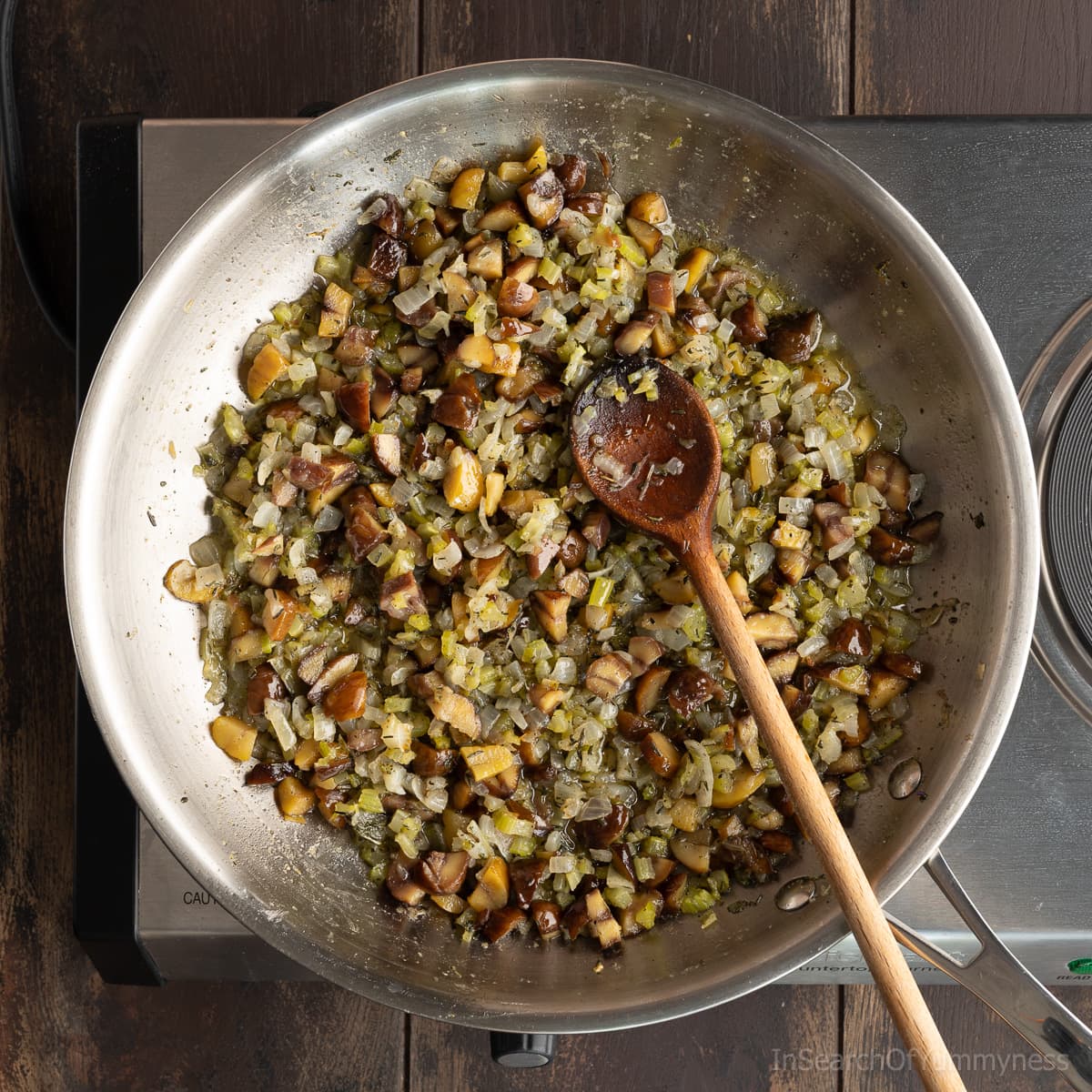
Step 3: Add the celery, thyme, and sage. Cook for about 7 minutes, stirring often. Stir in the chestnuts and cook for about 3 more minutes.
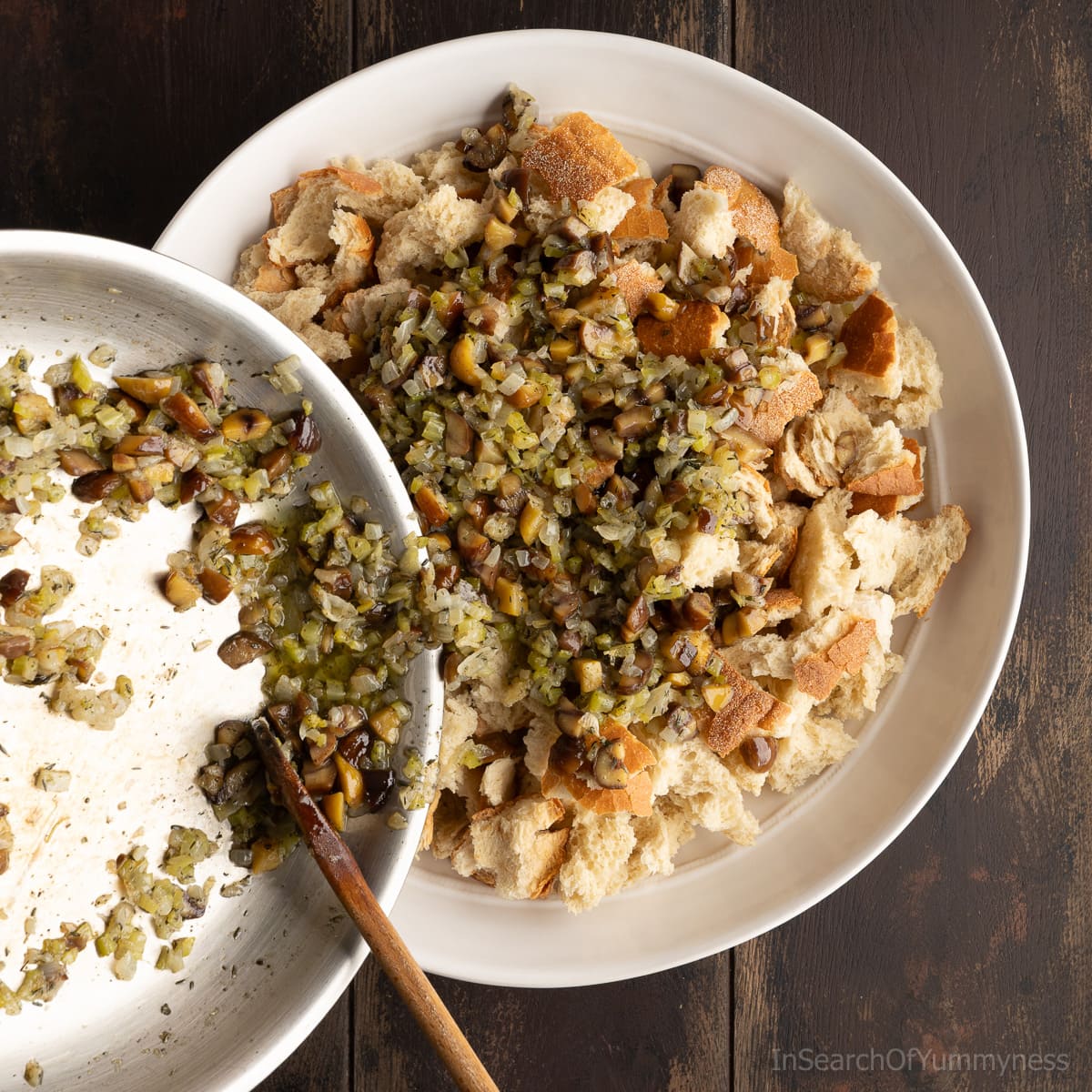
Step 4: Tip the dried bread into a large bowl, then scrape in the cooked vegetables.
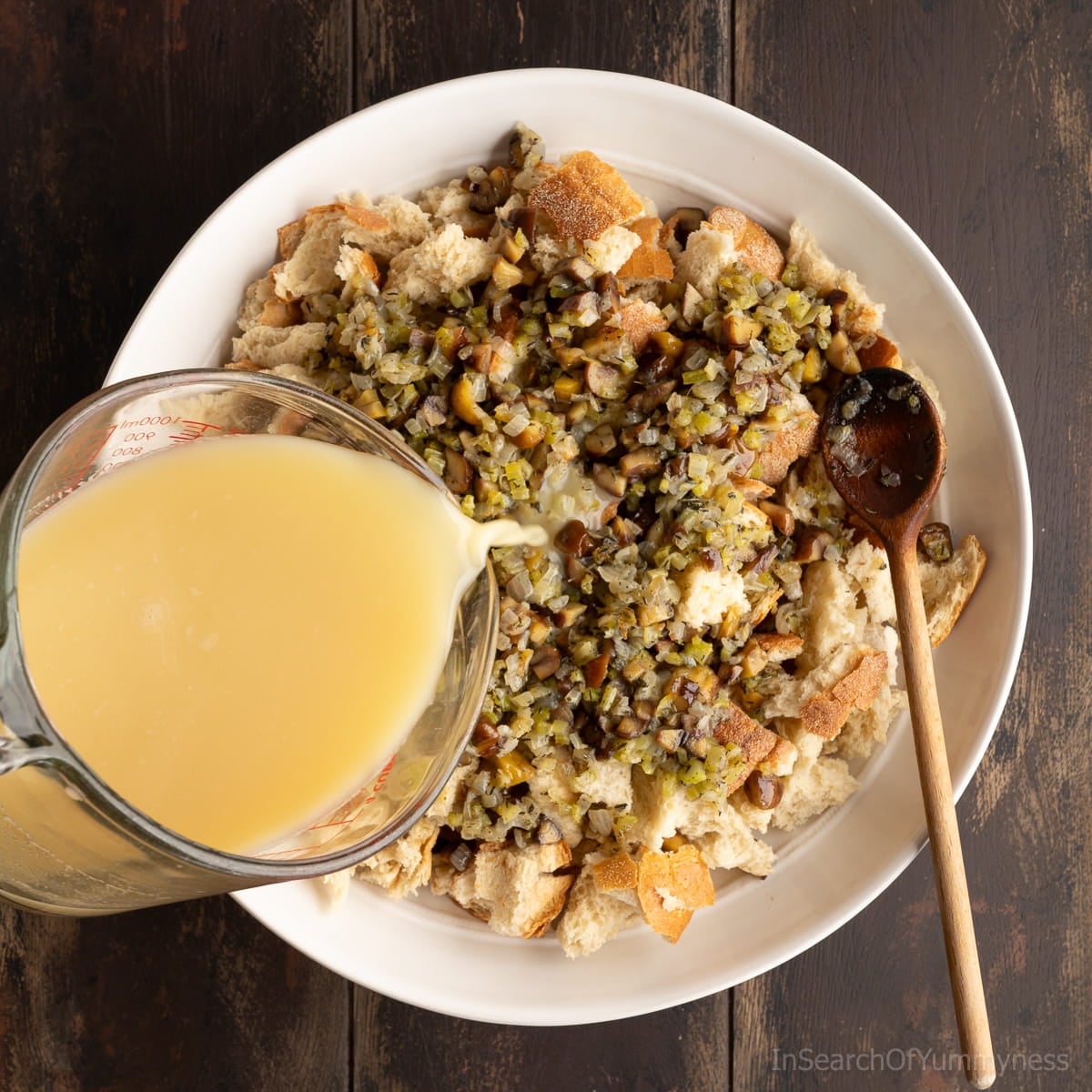
Step 5: In a medium bowl or measuring cup, whisk together the eggs and broth. Pour this over the bread, and season with pepper. Stir until the bread is evenly saturated with the broth.
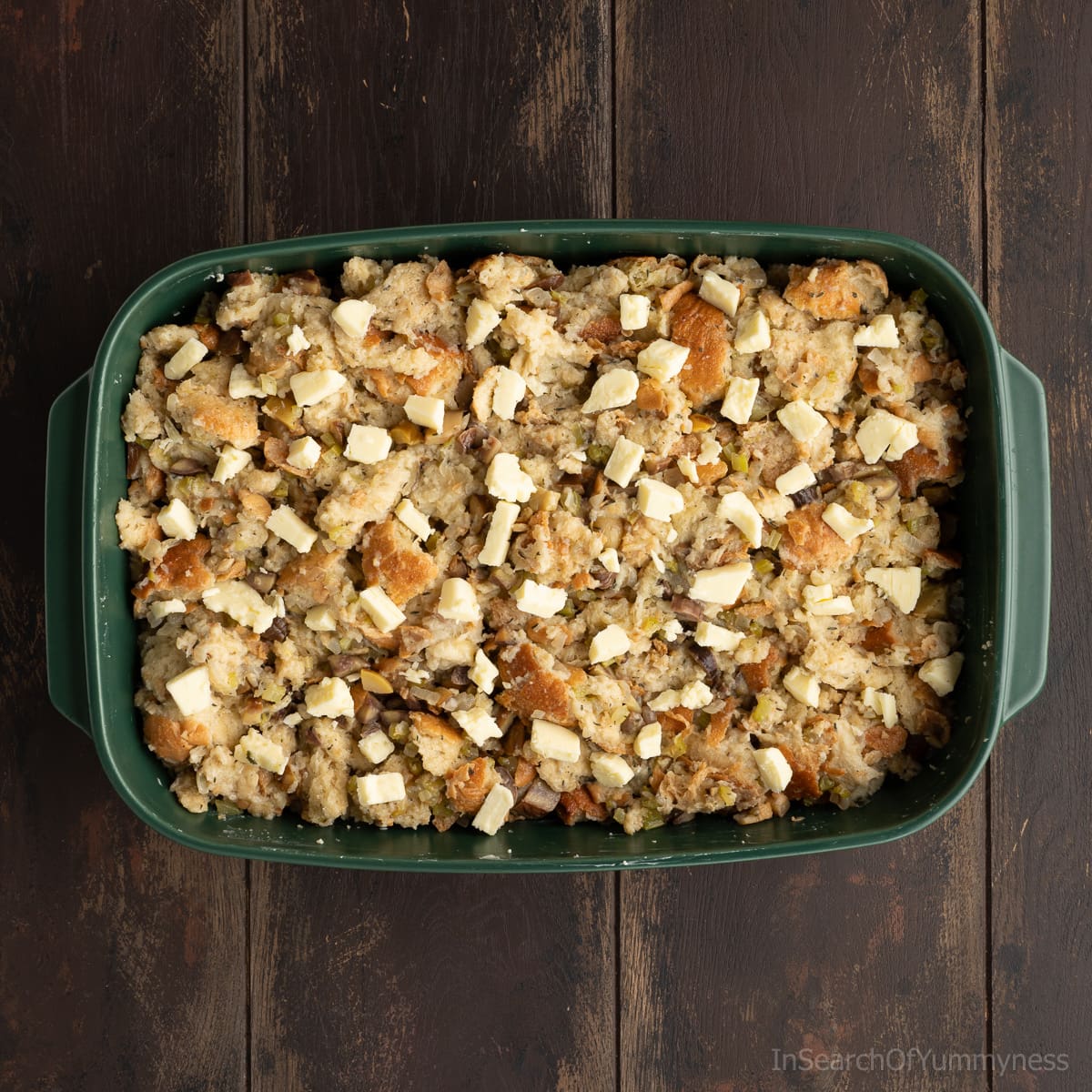
Step 6: Transfer the stuffing mixture into a greased baking dish. Dot the top with the reserved cold butter.
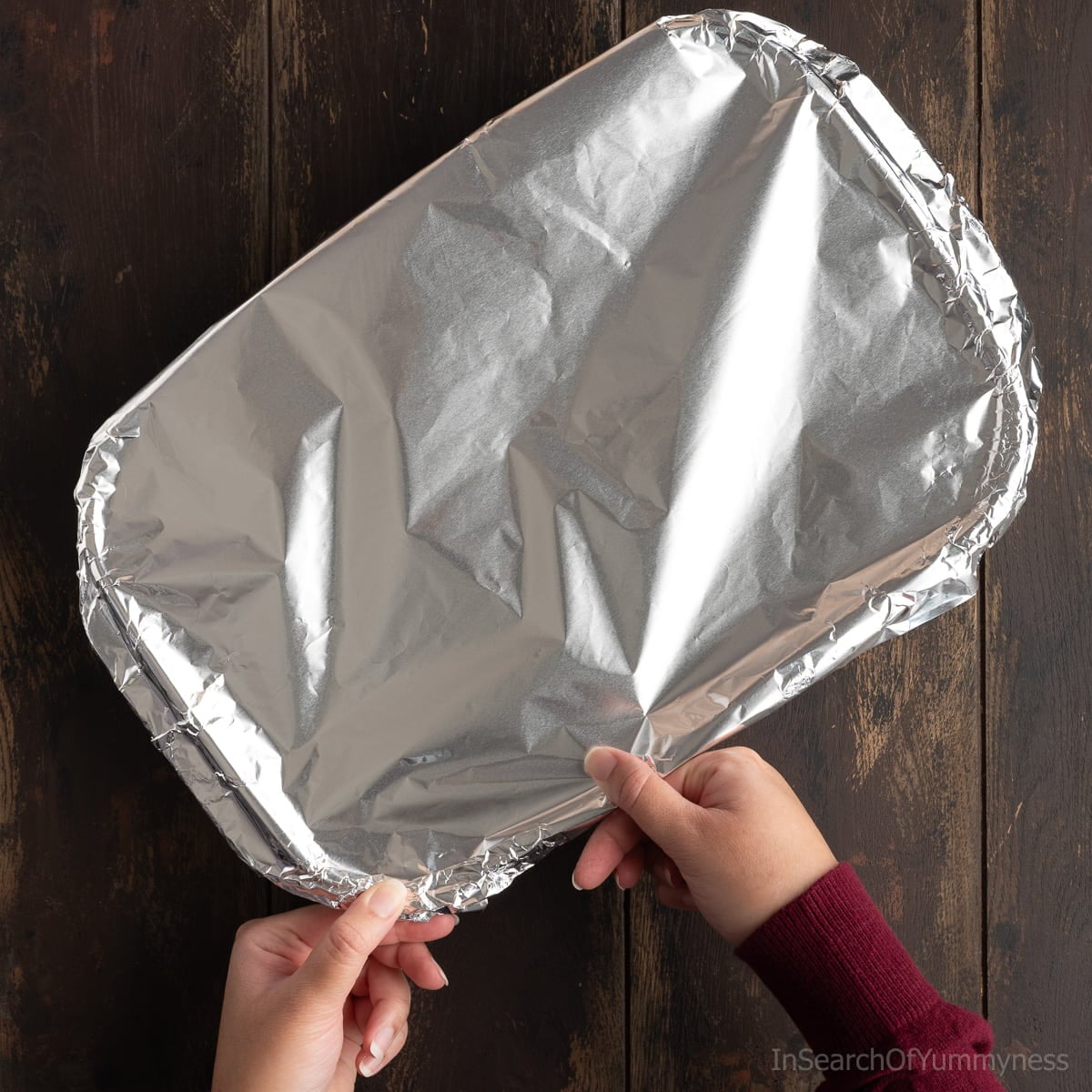
Step 7: Cover the dish tightly with foil. Crimp down the edges. Bake at 350°F (175°C) for about 30 minutes, or until a food thermometer inserted into the middle reads at least 165°F (74°C).
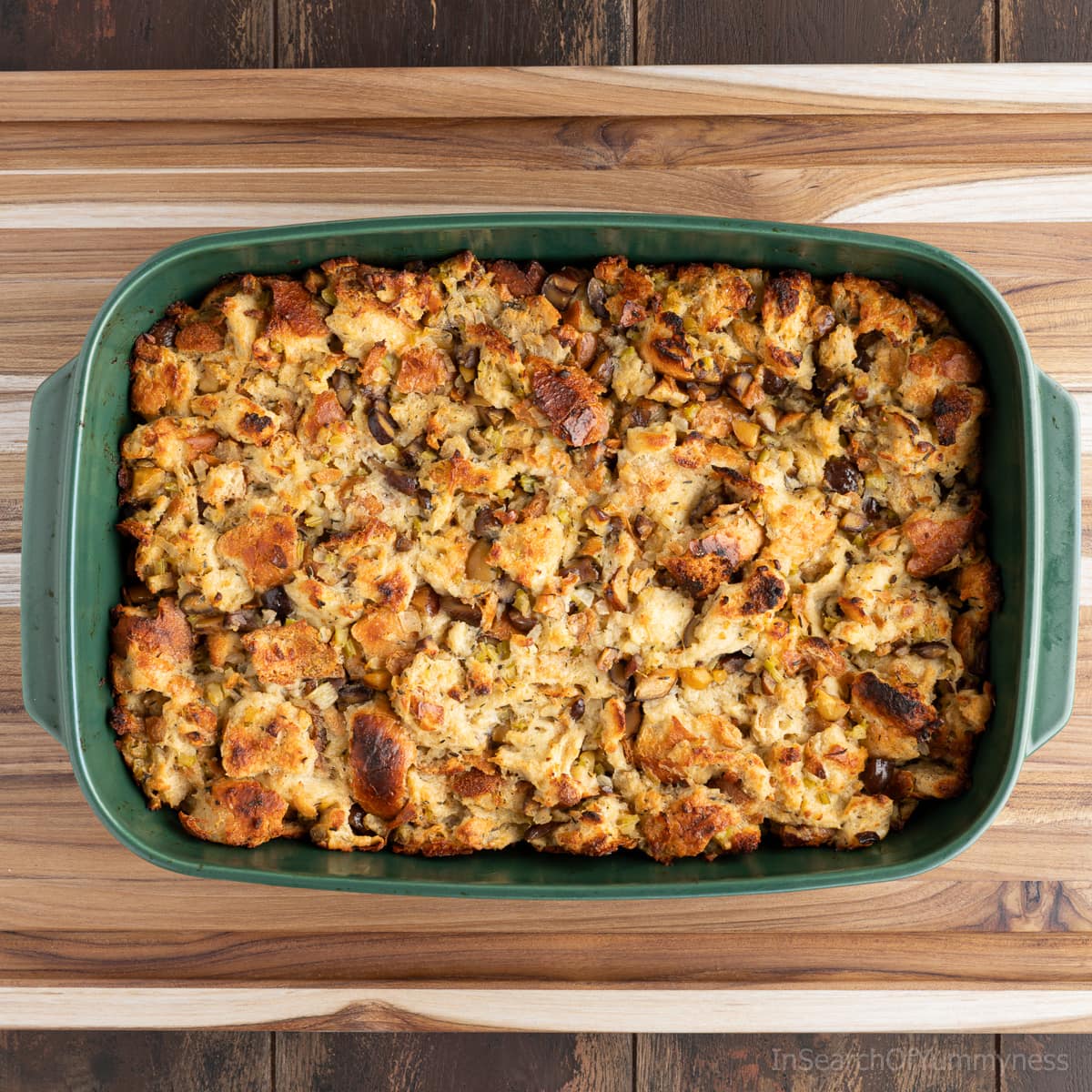
Step 8: Remove the foil and increase the oven temperature to 450°F (230°C). Bake for another 15 minutes, or until the top is golden brown. Let the stuffing rest for 10 minutes before serving.
Make-Ahead Tips
While this stuffing has the best texture when it's freshly baked, you do have some options for preparing this in advance.
Option 1: Prepare the components ahead of time
Stuffing actually works well with stale bread; I just prefer to dry it out myself in the oven to make sure the inside of the bread is very dry (but not toasted).
You can dry your bread a day or two in advance and store it at room temperature.
You can also cook the vegetables according to the recipe instructions, cool them completely, then store them in an airtight container in the refrigerator for a day or two.
Then, on the day you plan to serve the stuffing, you can just proceed with mixing everything and baking the stuffing.
Option 2: Bake the Stuffing Ahead of Time
This option is convenient, but you do lose a little bit of the crispy texture on the top of the stuffing.
You can follow the recipe, bake the stuffing until it's golden brown, and then allow it to cool completely on the counter. This might take longer than you think. My ceramic baking dish kept the stuffing hot for over an hour!
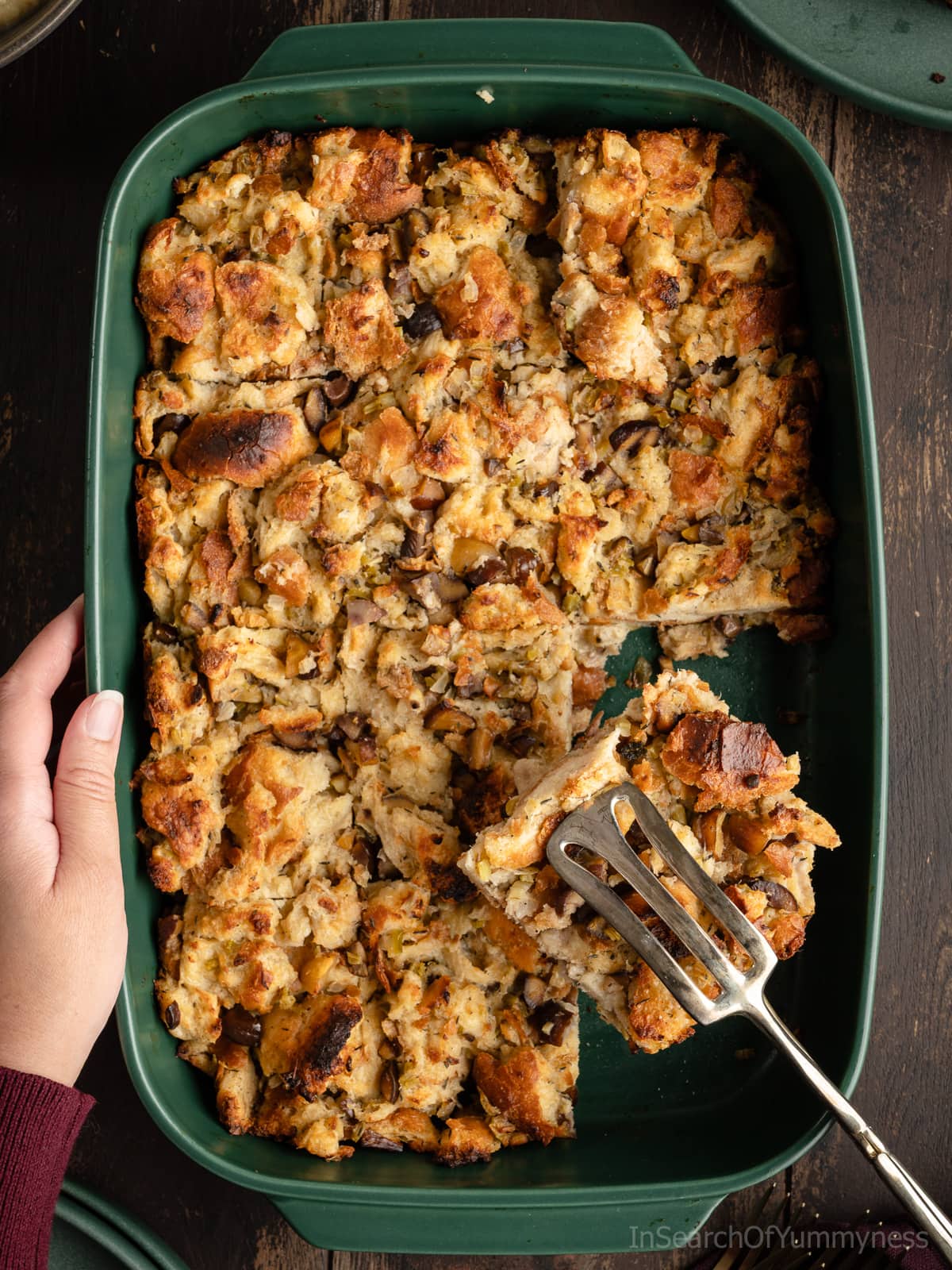
Once cool, you can cut the stuffing into 12 pieces and place them in an airtight container. They'll stay fresh in the refrigerator for 2-3 days, or about 2 months in the freezer. If freezing, be sure to thaw the stuffing in your refrigerator the day before you plan to serve it.
To reheat the stuffing: Place the slices in a baking dish and drizzle the tops with a little bit of melted butter. Cover the dish tightly with foil and bake at 350°F for 8-10 minutes, or until the internal temperature reaches at least 165°F (74°C). Note that overheating the stuffing, or skipping the foil, will result in overcooked chestnuts that become too hard to eat.
Food Safety
Please do not refrigerate uncooked stuffing or leave uncooked stuffing out at room temperature, as this can lead to the growth of bacteria and food poisoning. Instead, combine the wet and dry ingredients just before baking.
Also, it's important to cook egg-based foods to an internal temperature of at least 165°F (74°C) to ensure they are safe to eat.
Tips for Success
- Dry your bread thoroughly, or you'll end up with soggy stuffing.
- Don't overcook your chestnuts. Vacuum-packed chestnuts are very moist and easy to work with, but if you leave freshly cooked chestnuts in the skillet for too long, they can become hard.
- Use cold butter on the top before baking. The cold butter will melt slowly during the long baking process, which crisps up the bread without burning.
Serve With
Chestnut stuffing makes a delicious side dish to a roasted chicken or turkey.
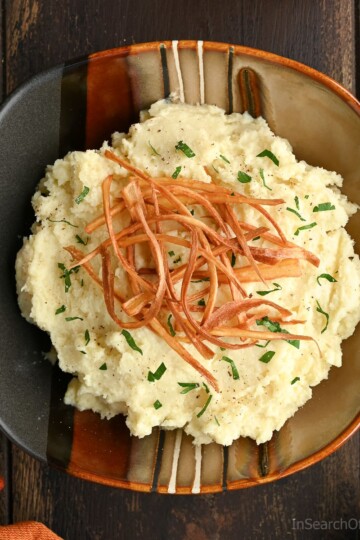
If you're planning a full holiday menu, my mashed parsnips pair well with this stuffing, along with classic side dishes like cranberry sauce and green bean almondine.
Common Questions
Yes! Just swap the chicken broth for vegetable broth.
I don't recommend it. This recipe was developed to be baked in a dish for the best texture (and food safety).
Yes, you could use a sourdough, baguette, ciabatta or rye bread. However, you may need to adjust the amount of broth as these breads have different moisture levels. I don't recommend using cornbread or pre-sliced sandwich bread for this particular recipe, as it can turn mushy.
More Holiday Side-Dish Recipes You'll Love
You can also check out these easy Thanksgiving recipes from real food bloggers for more ideas!
Recipe Card
Chestnut Stuffing
Ingredients
- 1 loaf crusty white bread, about 14 ounces
- ½ cup salted butter
- 1 ½ cups finely chopped onions, about 2 medium onions
- 1 teaspoon salt
- 1 cup finely chopped celery, about 3 celery ribs
- 1 teaspoon dried sage, or 1 tablespoon of fresh sage
- 1 teaspoon dried thyme, or 1 tablespoon of fresh thyme
- 1 cup cooked chestnuts, chopped (see notes)
- 2 large eggs, beaten
- 2 ¼ cups chicken broth, or vegetable broth
- ⅛ teaspoon black pepper, or to taste
For the Topping:
- 4 tablespoons salted butter, chopped into pieces and kept cold
Equipment
- Baking Sheet (Half Sheet Pan), to dry the bread
- 9x13" Baking Dish
- Cooking Spray, or melted butter (for greasing the baking dish)
- Large Skillet
- Large Mixing Bowl
- Medium Mixing Bowl, or Large Measuring Cup
- Aluminum Foil
- Food Thermometer, optional but recommended
Instructions
Drying the Bread:
- Preheat the oven to 200°F (95°C).
- Tear the loaf into 1-inch pieces and spread them out on a baking sheet. Bake for about 1 hour, until dry but not toasted.
Making the Stuffing:
- Use butter or cooking spray to grease the baking dish.
- Preheat the oven to 350°F (175°C).
- Melt ½ cup of butter in a large skillet over medium heat. Add the onions, season with salt, and cook for about 5 minutes or until softened.
- Add the celery, thyme, and sage. Cook for about 7 minutes, stirring often. Stir in the chestnuts and cook for about 3 more minutes.
- Tip the dried bread into a large bowl, then scrape in the cooked vegetables.
- In a medium bowl or measuring cup, whisk together the eggs and broth. Pour this over the bread, and season with pepper. Stir until the bread is evenly saturated with the broth.
- Transfer the stuffing mixture into a greased baking dish. Dot the top with the pieces of cold butter.
- Cover the dish tightly with foil. Crimp down the edges. Bake for about 30 minutes, or until a food thermometer inserted into the center reads at least 165°F (74°C).
- Remove the foil and increase the oven temperature to 450°F (230°C). Bake for another 15 minutes, or until the top is golden brown. Let the stuffing rest for 10 minutes before serving.
Want More Recipes Like This One?
(You can easily unsubscribe at any time)
Notes
- Do not refrigerate unbaked stuffing or leave it out at room temperature. Mix the wet and dry ingredients right before baking.
- This stuffing contains eggs. Bake until a food thermometer in the center reads at least 165°F (74°C).
- Refrigerate leftovers within 2 hours and eat within 2-3 days, or freeze.
- Reheat leftovers to 165°F (74°C).
- These are sweet chestnuts, not water chestnuts.
- Vacuum-packed: use two 100 g packages. They are softer and sweeter than fresh.
- Fresh Chestnuts: boil or roast, cool, peel, and chop before using.
- Don't skip the foil, or the chestnuts may become hard and dried out.
- I used an Italian loaf from my local grocery store.
- Cornbread and pre-sliced sandwich bread turn mushy.
- Sourdough, baguette, ciabatta, or rye also work, but you may need to adjust the broth.
- Chicken broth: use vegetable broth for a vegetarian version.
- Chestnuts: chopped pecans or hazelnuts.
- Dry the bread 1-2 days ahead and store it under a towel.
- Cook the onions, celery, and chestnuts 1-2 days ahead, cool completely, and refrigerate in an airtight container. Don't mix in the eggs or broth until baking day.
- To bake ahead: cool completely, cut into squares, and refrigerate up to 2-3 days or freeze up to 2 months. Thaw overnight in the refrigerator.
- To reheat: cover with foil, drizzle with melted butter, and bake at 350°F until the center reaches 165°F (74°C).
- 1 fresh red chili, chopped for heat, seeds removed if desired
- ⅓ cup chopped pecans or hazelnuts instead of chestnuts (they have a stronger flavour than chestnuts)
- ⅓ cup dried fruit for sweetness (cranberries or tart cherries)
Please read the full blog post for all of my tips, variations, and recommendations for this recipe.
Nutrition
Nutritional information is an estimate provided as a courtesy and will vary based on the specific ingredients used. For exact values, use your preferred nutritional calculator with the products you're using.
Private Notes
Have you made this recipe?
Let us know how it turned out in the comments!About Shareba
Shareba Abdul is a recipe developer and food photographer with a Culinary Arts certificate from George Brown College and 15+ years of experience creating and testing recipes for home cooks. She is also a member of the International Association for Culinary Professionals and tests every recipe on this website in her own kitchen. Learn more →

Leave a Comment: