


If you've never tried mashed parsnips, you're missing out.
This creamy side dish is naturally sweet with a soft texture that rivals mashed potatoes, but it's lighter and has a brighter flavour.
I'll show you how I make smooth mashed parsnips, plus which herbs to add when you're serving them with turkey, salmon, or beef.

Recipe Highlights
- Servings: Makes about 4 servings
- Time Commitment: 10 minutes prep + 20 minutes cook
- Effort Required: Very easy! Just peel, chop, simmer, and blend.
- Special Equipment: Saucepan, immersion blender (optional)
- Dietary Notes: Can be made dairy-free with vegan milk substitutes.
Not Ready to Cook?
(You can easily unsubscribe at any time)
Jump to:
Ingredients & Substitutions
Parsnips have a starchy, carrot-like flavour that's very sweet and bright.
This recipe uses milk instead of heavy cream to create a lighter, creamier mash.
An immersion blender does all the work of creating that smooth, luxurious texture.
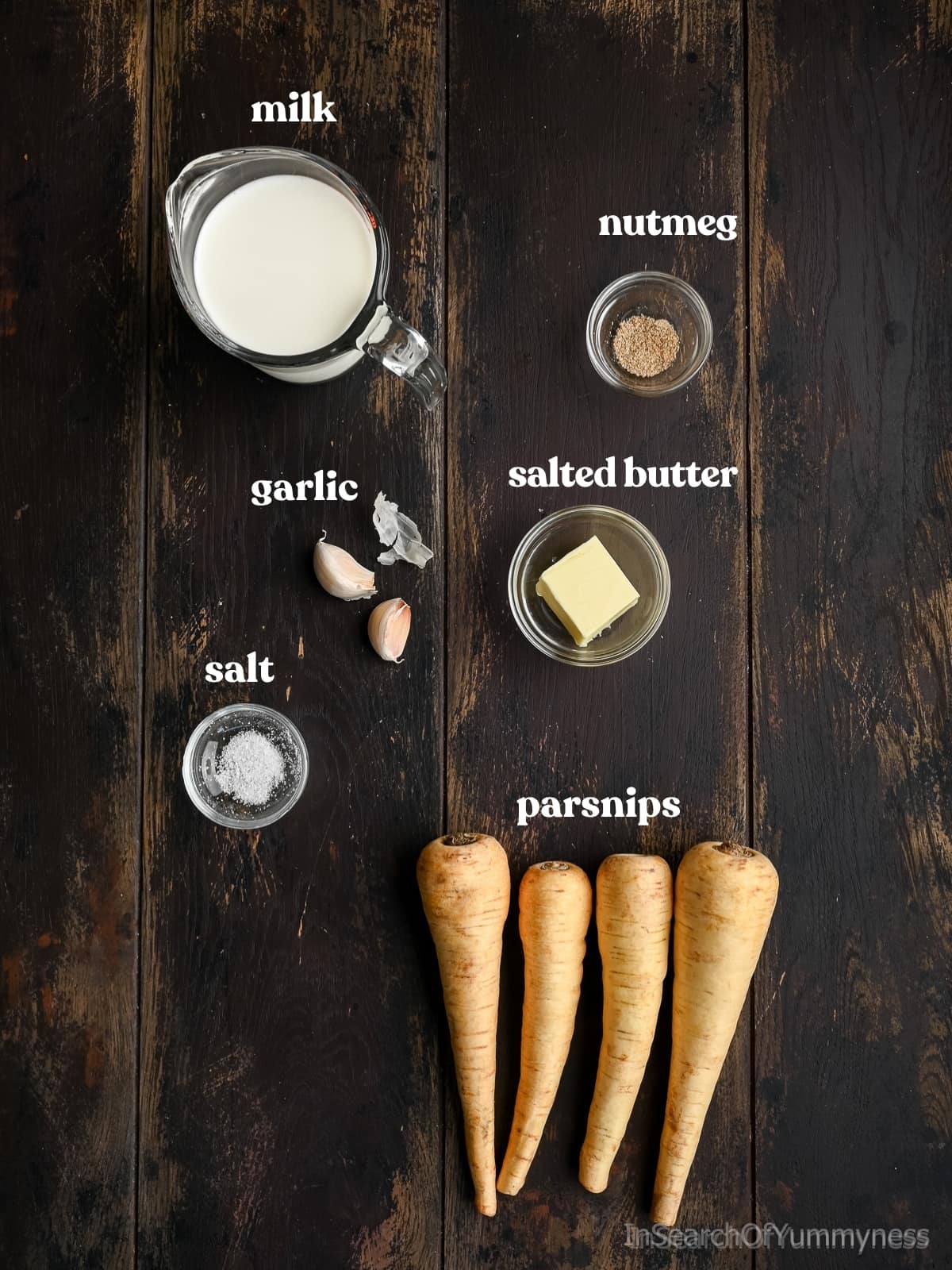
See below for key ingredient tips and my recommended substitutions.
- Parsnips: These are starchy root vegetables with a naturally sweet flavour. Look for firm parsnips without soft spots. Substitute with the same amount of carrots if needed, though the flavour will be different.
- Garlic: Adds savoury depth. Fresh garlic works best in this recipe. Jarred minced garlic and garlic powder will significantly change the flavour.
- Milk: Whole milk (3.25%) creates a richer mash. 2% milk works just as well if you prefer something lighter.
- Salted Butter: This adds richness and a touch of salt to the mash. You can use unsalted butter and add more salt to taste if you prefer.
- Nutmeg: This warm spice brings out the parsnips' natural flavours. Start with a small pinch of nutmeg and add more to taste.
This recipe has not been tested with all possible substitutions or variations. Making changes may alter the taste, texture, or overall outcome. If you try a different ingredient, please share in the comments!

See the recipe card for the complete ingredient list and recipe instructions.
Why I Make This Recipe
When my mom and I watched Chef Michael Voltaggio make mashed parsnips on Food Network, we loved the idea.
We didn't have a recipe, but the concept was simple: cook parsnips in dairy and make the parsnip equivalent of mashed potatoes.
After a few tries, we created a version that had the creamy texture and sweet flavour we were looking for.
We serve this recipe at home often, alongside beef stew or salmon. It also pairs beautifully with turkey, making it a wonderful side for Thanksgiving or Christmas dinner.
The secret to getting that smooth, creamy mash is using an immersion blender.
If you prefer a chunkier, more rustic texture, you can mash the parsnips by hand with a potato masher instead.
Variations
- Add more creaminess: If you want a richer mash, swap half the milk for heavy cream.
- Cheese option: Stir in a handful of grated Parmesan cheese after blending for a savoury twist.
- Add roasted garlic: Much like mashed potatoes, mashed parsnips benefit from the addition of a few roasted garlic cloves. Add them when you're mashing the parsnips.
- Maple sweetness: Drizzle a touch of maple syrup into the finished mash for an even sweeter vegetable side dish.
- Add black pepper: I don't add black pepper to my mashed parsnips, but you can if you want that flavour. White pepper would also work (but I don't really like how it tastes).
How to Make Mashed Parsnips
This comes together in about 30 minutes with minimal effort, and most of that time is hands-off simmering.

Step 1: Peel your parsnips with a vegetable peeler. Chop them into half-inch pieces so they cook evenly. Also, peel and smash your garlic cloves.
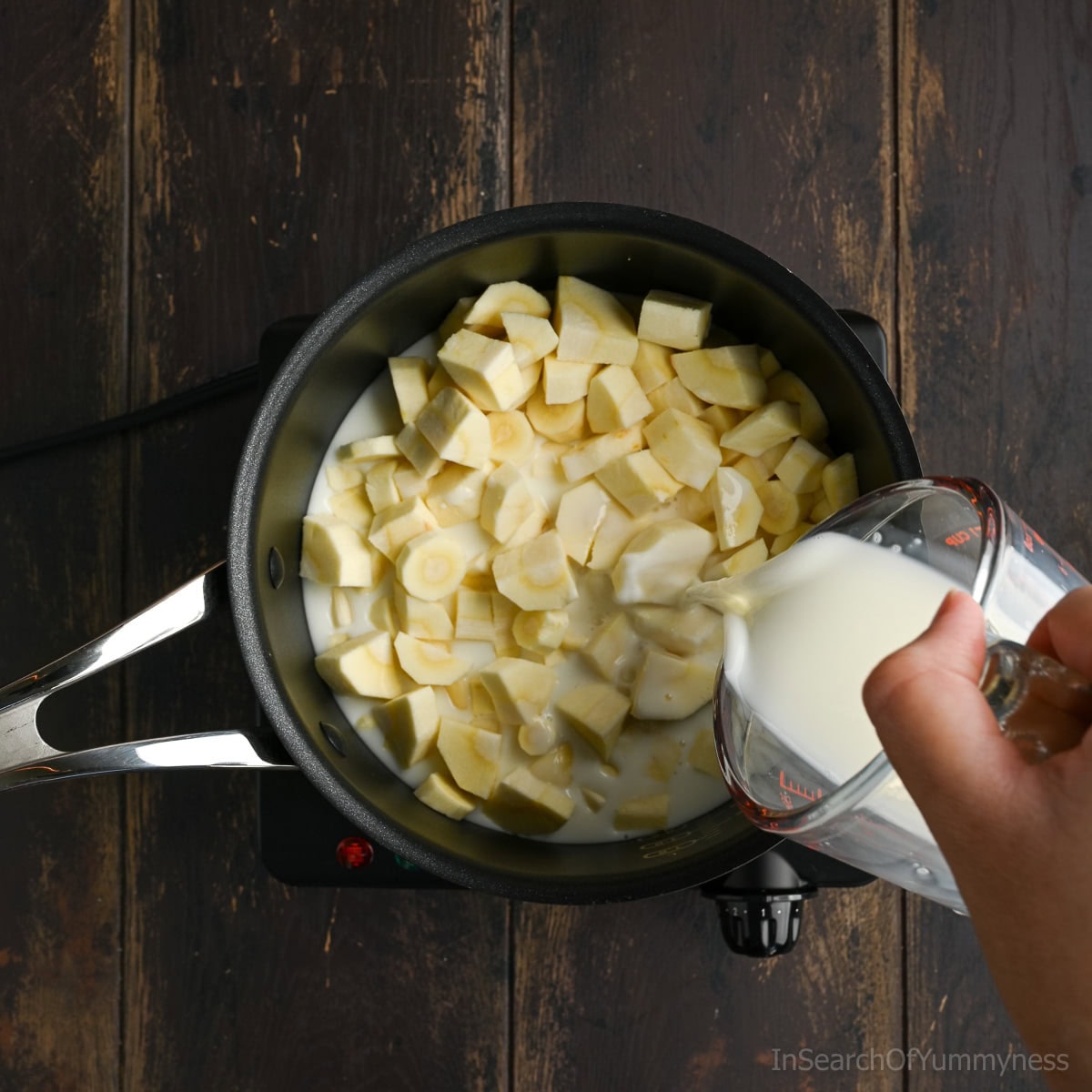
Step 2: Add the parsnips, garlic, milk, and a pinch of salt to a saucepan. Bring everything to a simmer over medium-high heat, then reduce to medium-low.

Step 4: Cook the parsnips until they are fork-tender. This usually takes about 15 to 20 minutes, depending on how small you chopped them.

Step 5: (Potato Masher Option)
Once the parsnips are soft, remove from heat and add the butter. Mash the mixture with a fork or potato masher until most of the large chunks are gone.
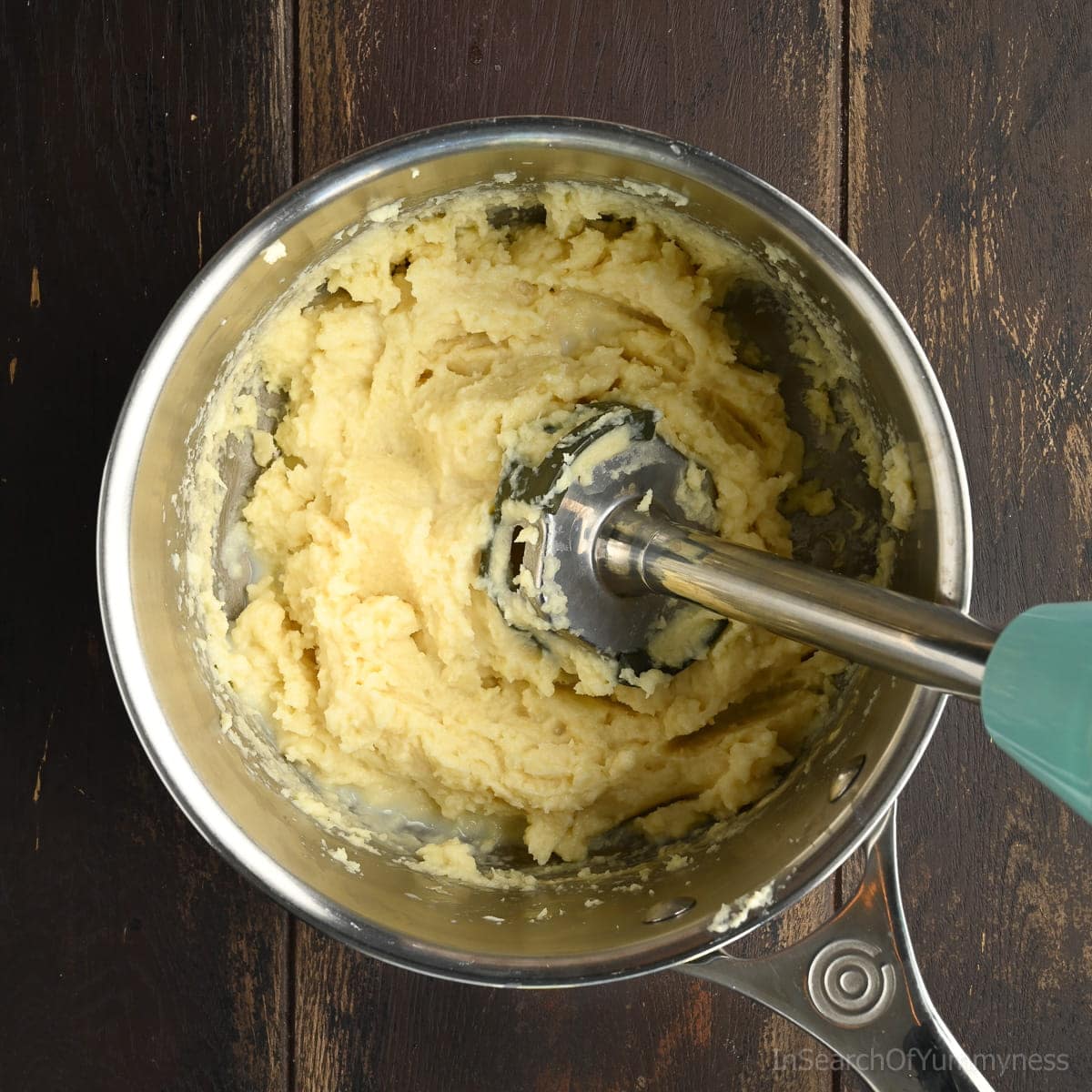
Step 5: For a smoother, creamier mash, use an immersion blender. Blend until you reach your desired consistency.
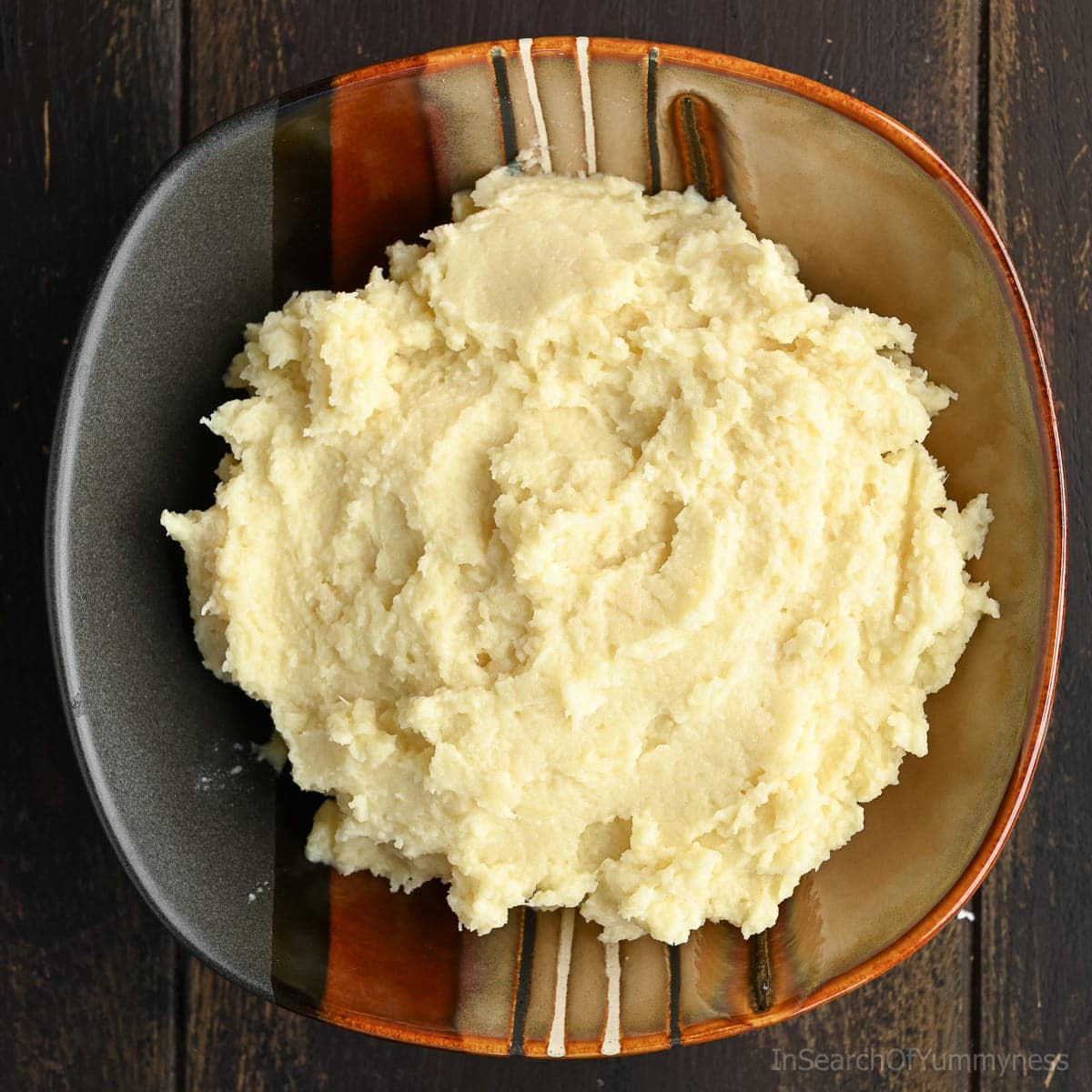
Step 6: Taste the mash and add more salt and nutmeg as needed. Sometimes I add just a tiny bit more butter or warm milk if it seems too thick.
Optional Garnish: Fried Parsnips
To make a nice crunchy topping for your mashed parsnips, fry up strips of the same vegetable. Here's how:
- Peel 1 parsnip.
- Use a julienne peeler to make thin strips of raw parsnip. If you don't have a julienne peeler, use a regular peeler to make wide strips, and cut them into thin strips with a knife.
- Fry in hot vegetable oil (350°F) until golden brown. This only takes about 3 minutes, so keep an eye on them!
- Drain on a paper towel and enjoy.
Flavour Pairings
The sweet, bright flavour of mashed parsnips pairs beautifully with many proteins and dishes. Here are my preferred protein and herb combinations:
Turkey: Add sage and nutmeg to the mash before serving. This combination is warm and comforting, making it perfect for Thanksgiving or Christmas dinner. The sage brings out savoury notes while the nutmeg enhances the natural sweetness.
Fish: Stir in fresh thyme while the parsnips cook. Thyme's earthy flavour complements salmon and other fish without competing. This pairing feels light and elegant.
Beef: Garnish the finished dish with a little bit of finely sliced parsley to add brightness. The creamy mash soaks up the rich broth and acts as a comforting bed for the meat and vegetables.
Make It Ahead of Time
- Prepare the mashed parsnips as written and let them cool completely.
- Store in an airtight container in the refrigerator for up to 3 days.
- To reheat, transfer to a saucepan and warm gently over medium-low heat, stirring occasionally. Add a splash of milk if the mash seems too thick.
- You can also freeze it for up to 2 months. Thaw in the fridge overnight and reheat before serving.
Frequently Asked Questions
Yes, you can. Use a potato masher to break down the parsnips after cooking. The texture will be chunkier and more rustic, which many people enjoy.
A food processor also works well for creating a smooth mash. You can also press the cooked parsnips through a fine-mesh sieve for a smoother result, though this takes a bit more effort.
Pierce them with a fork. When they're completely soft and the fork goes through without resistance, they're ready.
Store in an airtight container in the fridge for up to 3 days, or freeze for up to 2 months. Thaw in the refrigerator and reheat gently on the stove.
I hope you try this mashed parsnip recipe. It's become a regular side dish at our table, and I think you'll love how simple it is to make.
If you make this recipe, please leave a comment with a star rating below, or share a photo on Instagram and tag me @InSearchOfYummyness.
Looking for more holiday sides? Try my spinach salad with pears or this vanilla-glazed squash from my friend Susie Middleton.
You'll find even more options in my collection of easy Thanksgiving recipes. It includes favourites from both my kitchen and my food blogger friends.
Recipe Card

Mashed Parsnips
Ingredients
- 1 lb parsnips
- 2 cloves garlic
- 1 cup milk
- ⅛ cup salted butter
- salt, to taste
- grated nutmeg, to taste
- parsley, finely sliced for garnish (optional)
Equipment
- Immersion Blender, optional
Instructions
- Peel and chop parsnips into ½ inch pieces. Also peel and smash your garlic cloves.
- Add parsnips, garlic, milk and a pinch of salt to the saucepan.
- Bring to a simmer over medium-high heat, then reduce to medium-low. Cook uncovered until fork-tender, about 15 minutes. Remove from heat.
- Add butter and mash with a potato masher, or use an immersion blender to make the mixture smoother.
- Add salt and nutmeg to taste. Add a tiny bit more warm milk or butter if the mash seems too thick.Garnish as desired and serve warm.
Want More Recipes Like This One?
(You can easily unsubscribe at any time)
Notes
- Milk choice: Use whole milk (3.25%) for a richer mash or 2% for something lighter. The immersion blender creates creaminess, so heavy cream isn't needed. If you would prefer to use heavy cream, substitute half the milk with the cream.
- Texture: Immersion blender = smooth and creamy. Potato masher = chunkier and rustic. A food processor also works.
- Flavour pairings: Sage and nutmeg with turkey. Thyme with fish. Parsley with beef.
- Storage: Refrigerate leftovers in an airtight container for up to 3 days, or freeze for up to 2 months.
- Reheat: Warm gently on the stove with a splash of milk, stirring occasionally.
- Peel 1 parsnip.
- Use a julienne peeler to make thin strips of raw parsnip. If you don't have a julienne peeler, use a regular peeler to make wide strips, and cut them into thin strips with a knife.
- Fry in hot vegetable oil (350°F) until golden brown. This only takes about 3 minutes, so keep an eye on them!
- Drain on a paper towel and enjoy.
Please read the full blog post for all of my tips, variations, and recommendations for this recipe.
Nutrition
Nutritional information is an estimate provided as a courtesy and will vary based on the specific ingredients used. For exact values, use your preferred nutritional calculator with the products you're using.
Private Notes
Have you made this recipe?
Let us know how it turned out in the comments!About Shareba
Shareba Abdul is a recipe developer and food photographer with a Culinary Arts certificate from George Brown College and 15+ years of experience creating and testing recipes for home cooks. She is also a member of the International Association for Culinary Professionals and tests every recipe on this website in her own kitchen. Learn more →

Leave a Comment: