


Learn how to make preserved lemons at home with just two ingredients!
This delicious pantry staple adds intense, savoury lemon flavour to all kinds of dishes.

Recipe Highlights
- Servings: Makes about 16 servings (one 1 litre jar).
- Time Commitment: Just 15 minutes of hands-on time, plus 3 to 4 weeks to cure.
- Effort Required: Easy. The hardest part is being patient while they cure.
- Special Equipment: A citrus reamer or juicer makes quick work of juicing your lemons.
- Dietary Notes: Vegan and gluten-free. Just lemons and salt.
Not Ready to Cook?
(You can easily unsubscribe at any time)
Jump to:
What are Preserved Lemons?
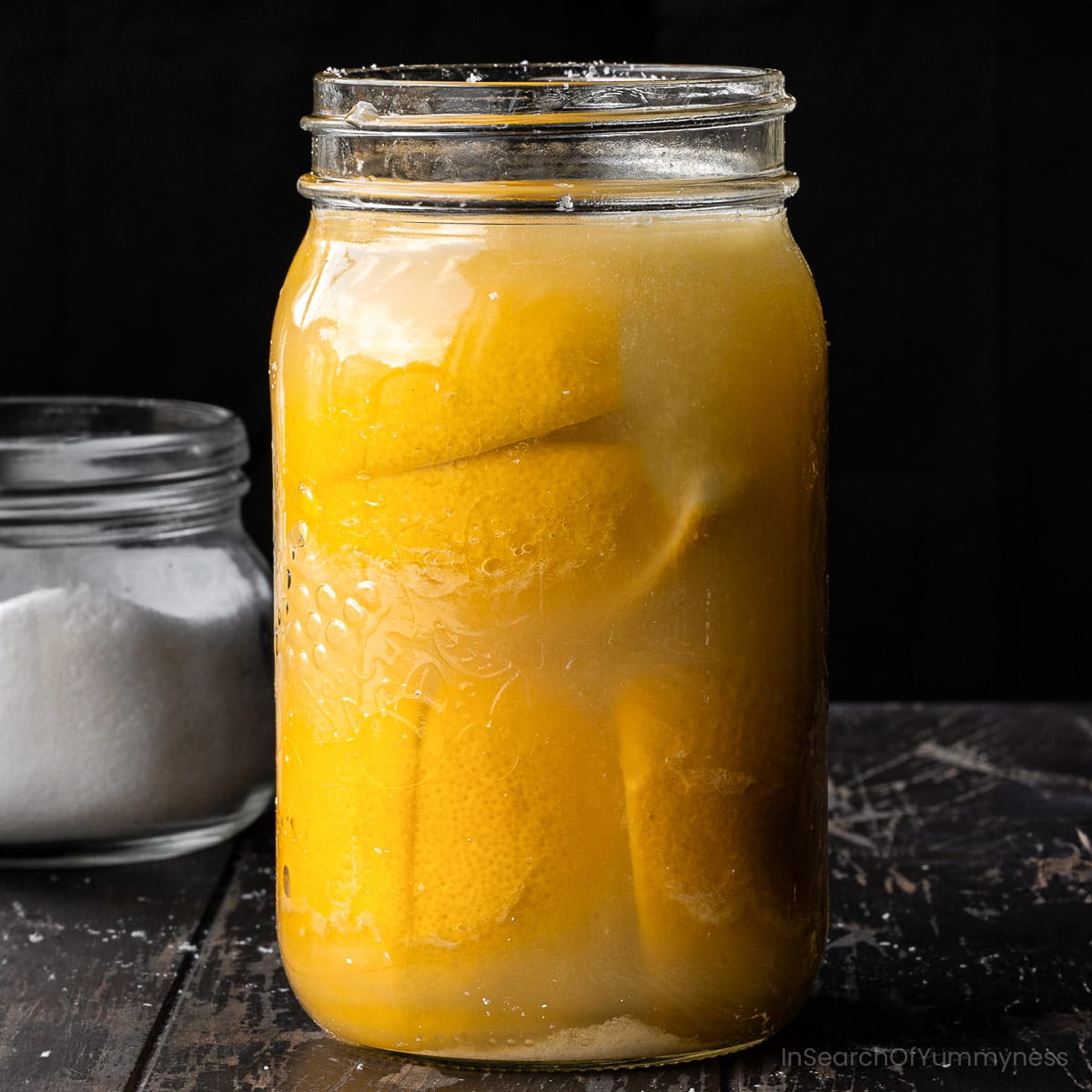
Preserved lemons are lemons that have been macerated, or softened by soaking, in a salt and lemon juice brine for several weeks.

The salt draws moisture out of the lemons, and the lemons soak up the brine in return. The result is a soft, edible rind with an intense, salty, umami-rich lemon flavour.
These lemons are meant to be used a little bit at a time to add a boost of flavour to stews, sauces, dressings and more.
Preserved lemons pair beautifully with meat, fish and grains. They're a staple in Moroccan cooking, and you'll also find them used in other North African, Middle Eastern and South Asian dishes.
Traditional preserved lemons take about 3-4 weeks (or longer) to process. There are recipes for "quick" preserved lemons that can be made in just a few hours, but the flavour is nowhere near as complex or intense as the real thing.
Ingredients & Substitutions
You only need two ingredients to make basic preserved lemons: fresh lemons and salt.
Some of your lemons will be juiced, and the rest will be packed with salt and preserved.

- Lemons: I prefer Meyer lemons for their slightly sweet flavour, but any lemon will work. Meyer lemons tend to be smaller than regular lemons, so buy organic if you can, since you'll be eating the rinds.
- Lemon Juice: You'll need the juice of about 5 to 6 fresh lemons. Avoid bottled lemon juice products made from concentrate, since fresh juice gives you a much better result.
- Salt: I use Diamond Crystal kosher salt, which has a coarser texture than table salt. Coarse sea salt is a good substitute.

See the recipe card for the complete ingredient list and recipe instructions.
Variations
I like to keep my preserved lemons plain, but you can add herbs or spices to the jar along with your lemons for a different flavour.
- Warm Spices: Add cinnamon and cardamom for a warm, Moroccan-style flavour.
- Spicy: Add whole dried chile peppers or whole black peppercorns for a bit of heat.
- Herbaceous: Add rosemary or thyme. Lemon thyme could be a fun choice, too.
Equipment
- Sterilized 1 litre wide-mouth mason jar with a snap lid
- Vegetable brush
- Citrus reamer or juicer
- Knife
- Cutting board
- Silicone spatula
- Spoon

If you're reusing old jars, check the snap lids and rings for dents or rust, and toss any that look damaged.
Why I Make This Recipe
I first tried preserved lemon in a chicken tagine at a Moroccan restaurant in Toronto, and those bright, intense pops of lemon flavour stuck with me.
Once I learned how to preserve lemons myself, I started adding them to everything, from couscous salads to baked fish, and I've never looked back.
You can find ready-made preserved lemons at specialty grocery stores, but I'd rather make my own.
It's easy, it just takes some patience, since a proper batch needs 3 to 4 weeks to develop its flavour.
Why I Sterilize The Mason Jar
I always sterilize my jars before making any kind of preserve. It's a good habit to build, and it helps whatever you're making last as long as possible.
Some people believe preserved lemons have enough salt and acid on their own to keep bacteria from forming. That may be true, but sterilizing the jar certainly doesn't hurt, and I'd rather play it safe.
I'm not a food scientist, but I did take a course on preserving, canning and fermentation at George Brown College, and sterilizing your jars was one of the very first things we were taught to do.
Resource: How to Properly Sterilize Canning Jars (using a canner or a large pot with a rack)
Making Preserved Lemons
The method for making preserved lemons is actually quite simple.
Prepare the Lemons
- Scrub your lemons well with a vegetable brush under warm running water. Dry them with a clean towel, then set aside about 6 lemons to preserve.
- Juice the remaining 5 to 6 lemons using a citrus juicer or reamer. You'll need this juice to cover the salted lemons once they're in the jar.

Tip: Skip shelf-stable lemon juice products made from concentrate. You need the acidity of fresh lemon juice.
Salt and Pack the Lemons
Once you have your lemon juice set aside, it's time to start preparing the remaining lemons.

Use a sharp knife to trim off the top and bottom of each lemon.

Slice each lemon almost into quarters lengthwise, leaving about half an inch intact at the base.

Pack about a tablespoon of salt into each lemon. Be generous.

Pack the salted lemons snugly into your sterilized mason jar, using a silicone spatula to press them down.
Brine and Cure the Lemons
Once your jar is packed with salted lemons, it's time to cover them with the lemon juice.

- Pour the lemon juice over the salted lemons until they're completely covered.
- Close the jar and store it in a cool, dry spot for 3 to 4 weeks. I use the cupboard farthest from my stove.
- Check on the jar weekly to make sure the lemons stay submerged. If any have floated above the juice, push them back down with a silicone spatula and top up with more fresh lemon juice as needed.
- After 3 to 4 weeks, once the rinds have softened, move the jar to the refrigerator. The lemons are ready to use right away.
Tip: Label the jar with the date you made it, so you can keep track of how long it's been in the refrigerator.
Storage
Since these preserved lemons aren't processed using a boiling water bath or any other canning method, the refrigerator is the safest place to store them.
Refrigeration slows bacterial growth and helps your preserved lemons stay good for longer.
Always use a clean utensil, never your fingers, to take a lemon out of the jar so you don't introduce bacteria.
How to Use Preserved Lemons
I use a clean fork to lift a lemon out of the jar, set it on a clean plate, and snip off what I need with kitchen scissors. Then I return the rest to the jar.
If you're putting any unused lemon back into the jar, make sure it stays clean so you don't contaminate the rest of the batch.
Eventually, the lemons will break down enough that you can simply scoop out however much you need.
Before using a piece, I rinse it to remove excess salt, then chop or dice it finely, picking out and discarding any seeds as I go.
Ways to Enjoy Preserved Lemons
- Dice and add them to a Moroccan chicken tagine
- Thinly slice and scatter over roasted vegetables as a garnish
- Chop finely and add to a couscous salad
- Dice and whisk into your favourite vinaigrette
- Use the leftover brine to add salty lemon flavour to marinades and dressings
Frequently Asked Questions
Stored properly in the refrigerator, preserved lemons will keep for about 6 months, and some sources say up to a year. If you notice an off smell or any mould in the jar, throw the batch out.
It's a good idea. Salt and acid do help slow bacterial growth on their own, but sterilizing your jar adds an extra layer of safety and helps your lemons last as long as possible.
It's usually best to give preserved lemons a quick rinse before using them to remove some of the excess salt, though they'll still taste pleasantly salty. If you forget, it's not a big deal.
It's best to avoid them, since they're quite bitter. Pick out and discard any seeds as you come across them.
I hope you enjoy making these preserved lemons! Once you start using them, you'll find yourself wanting to add them to everything.
If you make this recipe, I'd love for you to leave a comment and a star rating below. Thank you!
Recipe Card
Preserved Lemons
Ingredients
- 6-8 Meyer lemons, 4-6 if using regular lemons
- 6-8 tablespoon Diamond Crystal kosher salt, 4-6 tablespoon if using regular lemons
- 1 cup lemon juice, from about 5 Meyer lemons
Equipment
- 1 Vegetable Brush
- 1 Citrus Juicer, or Citrus Reamer
- 1 Knife
- 1 Cutting Board
- 1 Spoon
- 1 Wide Mouth Mason Jar with Snap Lid, (1 Litre size)
Instructions
- Sterilize your mason jar (see blog post for details).
- Wash your lemons well with a brush under warm running water.
- Trim away both the top and bottom ends of the lemons.
- Cut lemons almost into quarters, being careful not to cut all the way through the fruit. Leave about half an inch intact on the bottom of each lemon.
- Pack each cut lemon with about a tablespoon of salt, then place them snugly into the Mason jar.
- Top jar with enough lemon juice to fully immerse the lemons. Push lemons down and add more juice, if needed.
- Close jar and store in a cool dark place for 3-4 weeks. Check the bottle weekly to make sure that lemons remain submerged under the juice. If needed, open jar, press lemons down with a spatula and top off with more lemon juice.
- Once lemon rinds have softened, place the jar in the refrigerator. Preserved lemons will keep in the refrigerator for 6 months (up to a year, if stored correctly).
- To use: Take a piece of lemon out of the bottle and rinse it. Dice or mince the preserved peel and pulp, and add it to stews, salad dressings or more.
Want More Recipes Like This One?
(You can easily unsubscribe at any time)
Notes
- You will need about a dozen Meyer lemons for this recipe. 6 for the jar and 5-6 for juicing.
- Lemons vary in size, so you may need more or less lemons to fill a 1 litre jar. Usually, Meyer lemons are smaller than regular lemons (but not always).
- You cannot substitute a shelf-staple lemon juice product made with lemon juice concentrate (like ReaLemon) for fresh lemon juice.
- These preserved lemons take about 3-4 weeks (or longer) to process. They need this much time to develop flavour.
- Label your preserved lemons with the date you made them, so you can keep track of when they might start going bad.
- If you notice a strange smell or any mould in your jar at any time, discard the lemons.
- Please sterilize your jar before making your preserved lemons. You can learn how to sterilize jars here: https://www.thespruceeats.com/how-to-sterilize-canning-jars-1327595
Please read the full blog post for all of my tips, variations, and recommendations for this recipe.
Nutrition
Nutritional information is an estimate provided as a courtesy and will vary based on the specific ingredients used. For exact values, use your preferred nutritional calculator with the products you're using.
Private Notes
Have you made this recipe?
Let us know how it turned out in the comments!About Shareba
Shareba Abdul is a recipe developer and food photographer with a Culinary Arts certificate from George Brown College and 15+ years of experience creating and testing recipes for home cooks. She is also a member of the International Association for Culinary Professionals and tests every recipe on this website in her own kitchen. Learn more →
Shareba Abdul says
Preserved lemons are a simple way to add flavour to all kinds of dishes. I always keep a jar in my fridge. I hope you'll give this recipe a try!