

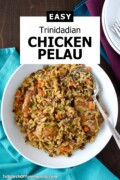
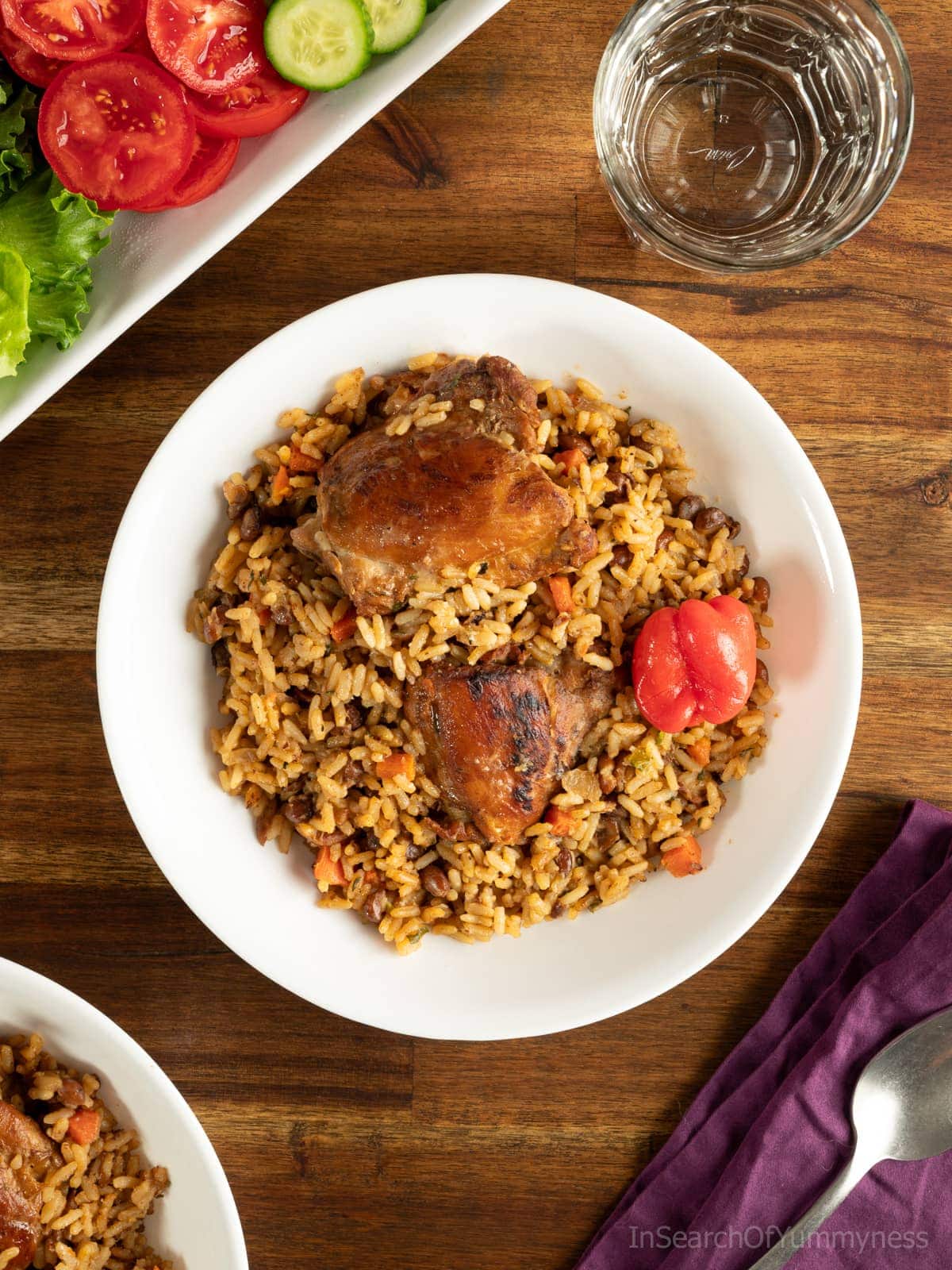
Trinidad pelau is a one-pot rice dish that's easy to make, comforting, and full of flavour.
Chicken, pigeon peas, rice, and coconut milk all cook together with caramelized sugar, giving the rice a rich colour and a subtle sweetness that makes this dish so delicious.
I'm sharing my mom's version of this recipe, along with step-by-step instructions, so you can recreate this dish in your own home.
Recipe Highlights
- Servings: 4-6 people
- Time Commitment: 30 minutes prep (optional marinating) + 35-40 minutes cooking
- Effort Required: Moderate. Requires caramelizing sugar, but still a one-pot meal.
- Special Equipment: Large heavy-bottom pot or Dutch oven.
- Dietary Notes: Only contains dairy if using Golden Ray margarine (optional).
Not Ready to Cook?
(You can easily unsubscribe at any time)
I am so happy with this recipe. Making this brought back so many childhood memories. I was so happy to cook this for family and they enjoyed it, this will become a family staple in our home. - Natasha
Jump to:
Why I Make This Recipe
When I think of iconic Trinidadian recipes, three dishes always come to mind: callaloo with crab, macaroni pie, and chicken pelau.
These are the family recipes my mom cooked when I was growing up. The ones that filled our home with the rich smell of herbs, coconut, and caramelized sugar.
Over the years, I've been learning to make them myself, documenting each one here on my website so I can share them with you.
This Trini pelau with chicken and pigeon peas is our family's version, and I think it might be the most tested recipe on my website.
Every Trinidadian family has their own way of making pelau, but (of course) I'm partial to this one. It's the recipe my mom has been cooking for me all my life, and now I get to share it with you.
Ingredients & Substitutions
To make this traditional pelau more accessible, I swapped out the usual "green seasoning" for a quick base of green onions, thyme, cilantro, and garlic.
It gives you those same classic flavours without needing the scratch-made blend on hand.
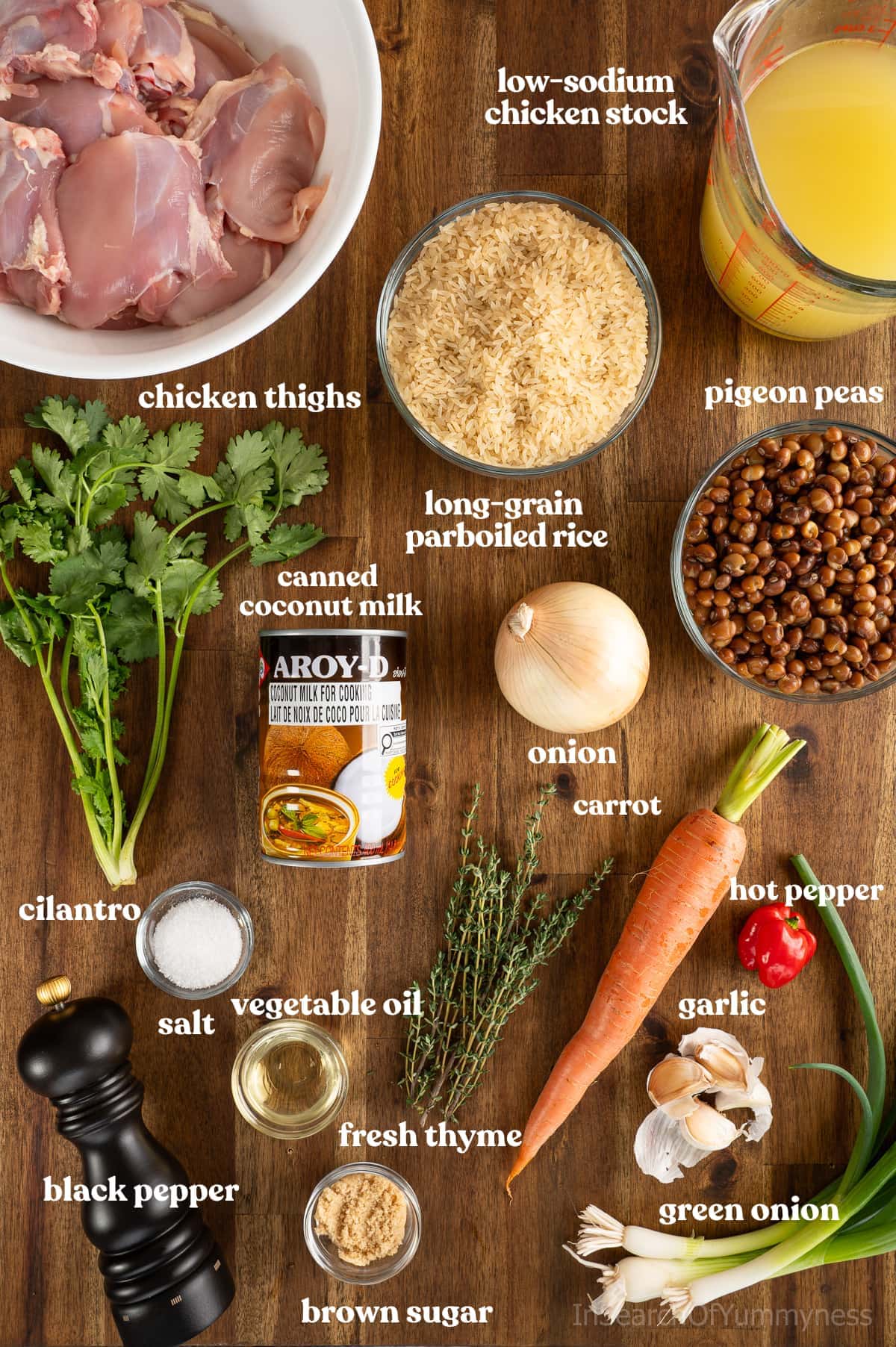
- Chicken (bone-in): Use chicken thighs or drumsticks, as dark meat stays tender and adds richness to the rice. Although it's not traditional, I prefer to use skinless chicken thighs to reduce the amount of fat in this recipe.
- Fresh thyme: I like using sprigs of fresh thyme in this recipe, but dried thyme also works (reduce the amount by ⅓).
- Garlic: Fresh garlic has the best flavour, but you can also use jarred minced garlic.
- Brown sugar: For creating the "burnt" sugar base. I used golden brown sugar.
- Pigeon peas: Small legumes that are essential to pelau. I prefer canned "dry" pigeon peas (they're still in liquid, just not the bright green variety). They have a nuttier flavour and better texture than the green ones. If using dried pigeon peas, soak them overnight.
- Rice: Regular long-grain rice or parboiled rice works best in this recipe. Don't use short-grain or basmati rice, as they will become mushy.
- Cilantro: Finely chopped fresh cilantro adds brightness. Omit if you don't like the flavour. Substitute with shado beni (culantro), if available.
- Scotch bonnet pepper: A very spicy pepper that adds a signature flavour to this dish. Use just a small piece or leave it out entirely if you don't like spicy food. Substitute with a habanero pepper if desired, but know that the flavour will be different.
- Coconut milk: Use coconut milk sold in cans or cartons for cooking, not the coconut milk that's meant for drinking (it's too watery). Shake the can or carton well before measuring.
- Golden Ray margarine: Traditional but optional. It isn't easy to find here in Canada, so I don't include it in the main recipe.
I would have added shado beni (also called bandhania or culantro), which is an essential ingredient in green seasoning, but unfortunately, it is difficult to find where I live.
If you do have green seasoning, feel free to use 2-3 tablespoons to season your chicken.
Also, this dish is usually made with Scotch bonnet peppers, but again, I couldn't find them at my local grocery store. I used a habanero instead, but it's not the same.
This recipe has not been tested with all possible substitutions or variations. Making changes may alter the taste, texture, or overall outcome. If you try a different ingredient, please share in the comments!

See the recipe card for the complete ingredient list and recipe instructions.
Recipe Variations
As I mentioned before, every family has their own Trinidad pelau recipe. Here are some popular variations that you might like to try:
- Ketchup: Adds tang and a deeper reddish colour.
- Worcestershire sauce: adds salty, savoury and tangy flavour.
- Tomatoes: Fresh or canned diced tomatoes give extra body.
- Pumpkin or butternut squash: Brings sweetness and richness.
Recipe Video
Step-by-Step Instructions
We're going to build the flavours of this one-pot chicken and rice dish one step at a time. Taking your time with each step will give you the best results.
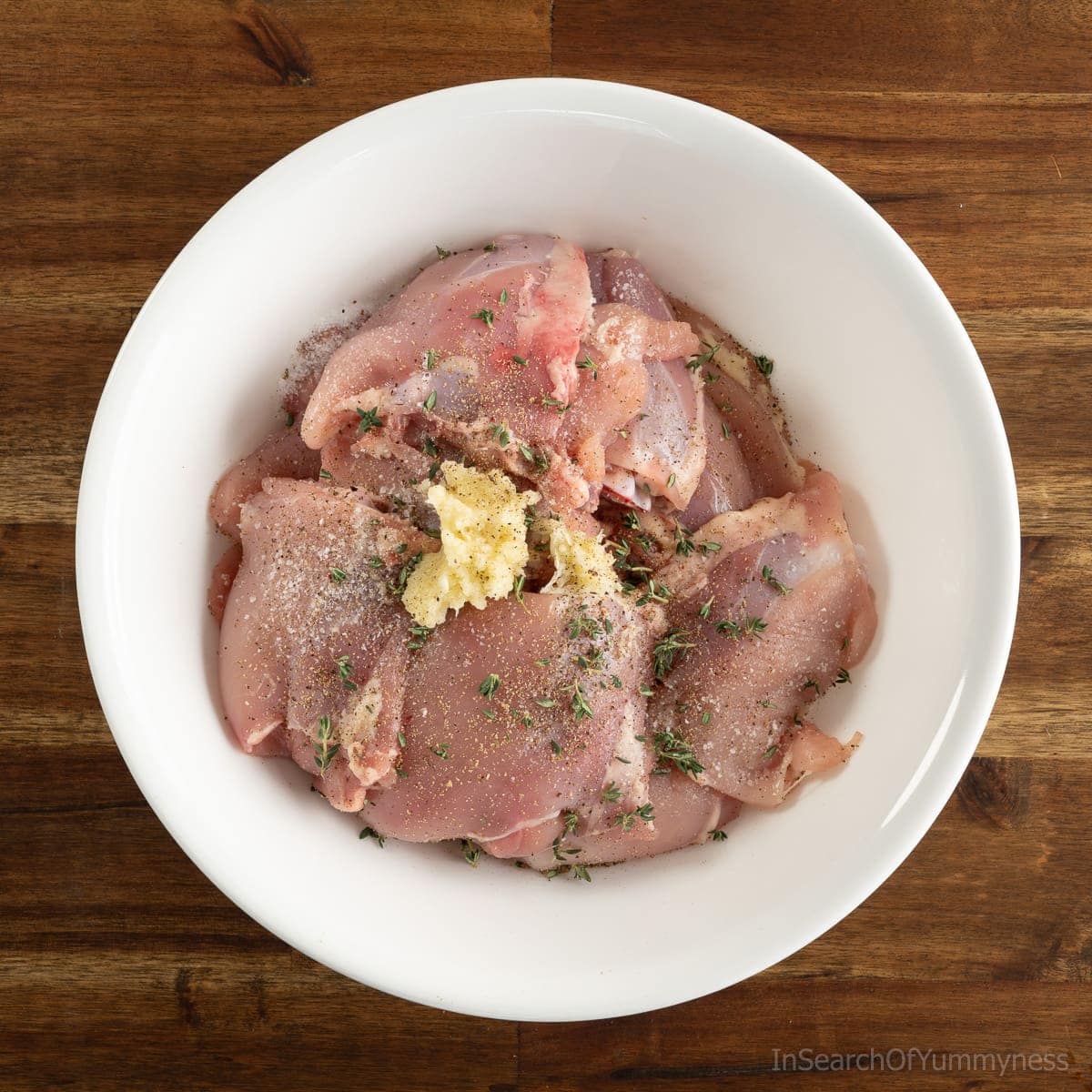
Step 1: Season the chicken with the leaves from 1 sprig of fresh thyme, garlic, ½ teaspoon salt and black pepper. Refrigerate overnight, if desired.
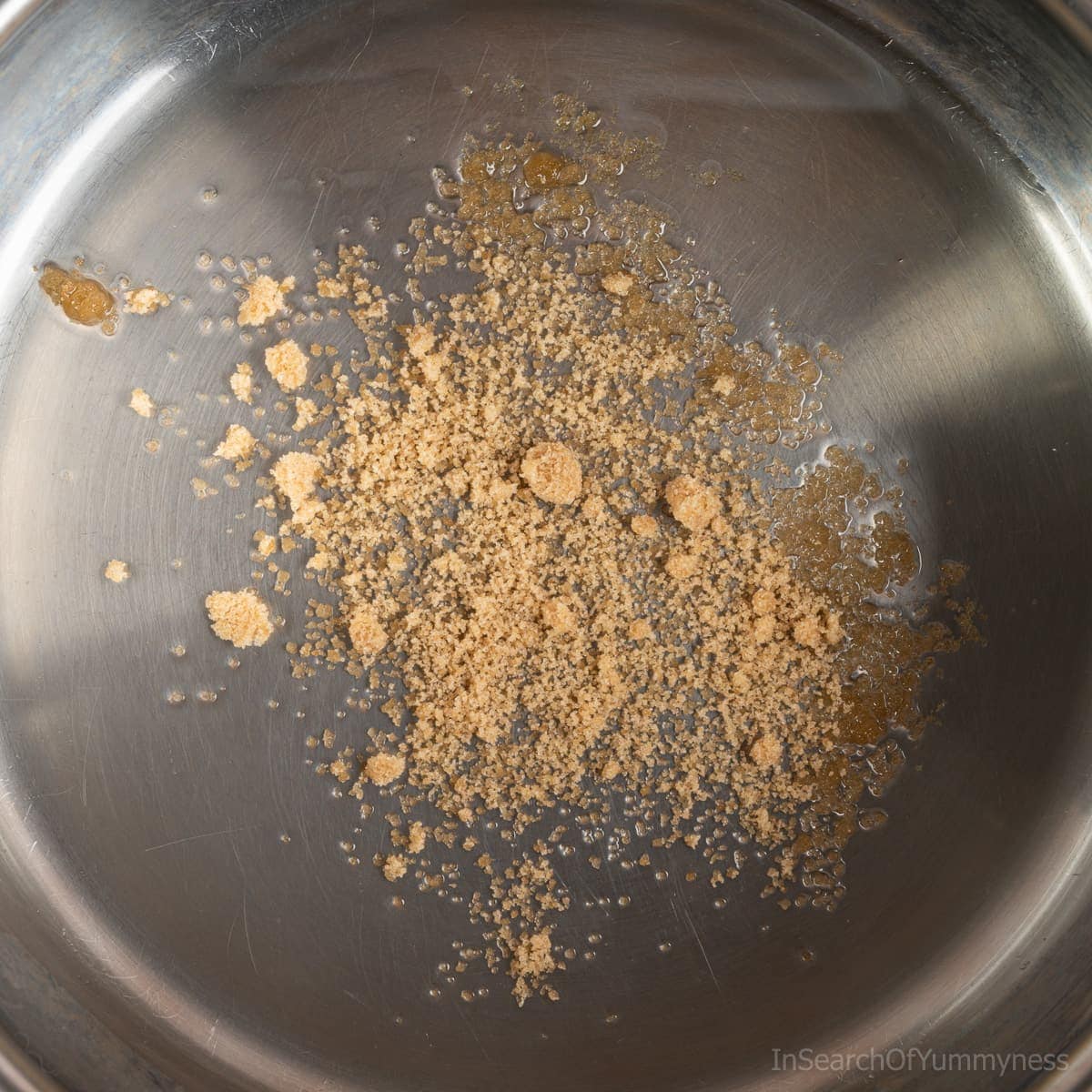
Step 2: Heat oil in a large pot over medium heat. Add brown sugar in an even layer. Allow the sugar to caramelize.
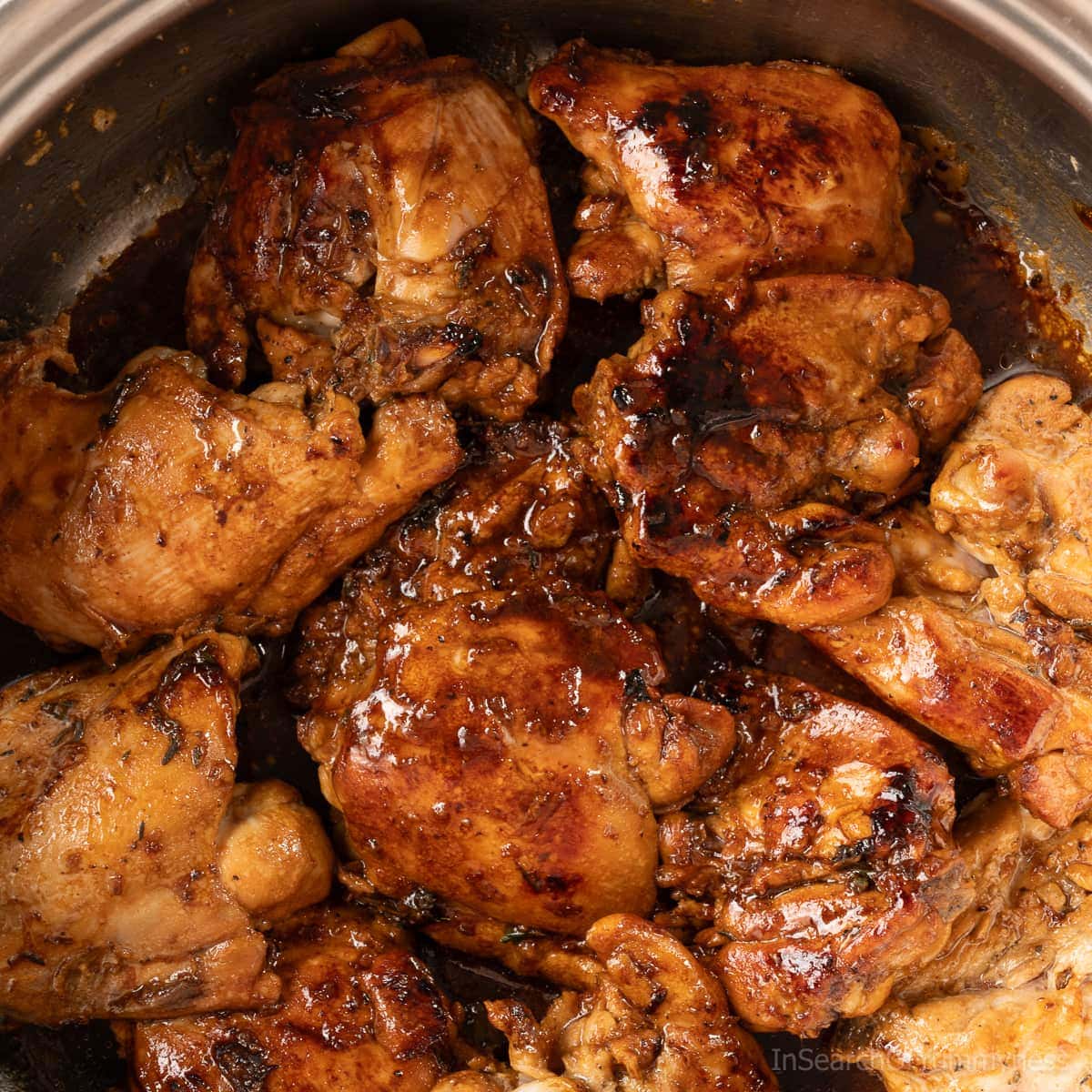
Step 3: Carefully add seasoned chicken to the pot. Stir to coat in the sugar and brown on all sides.
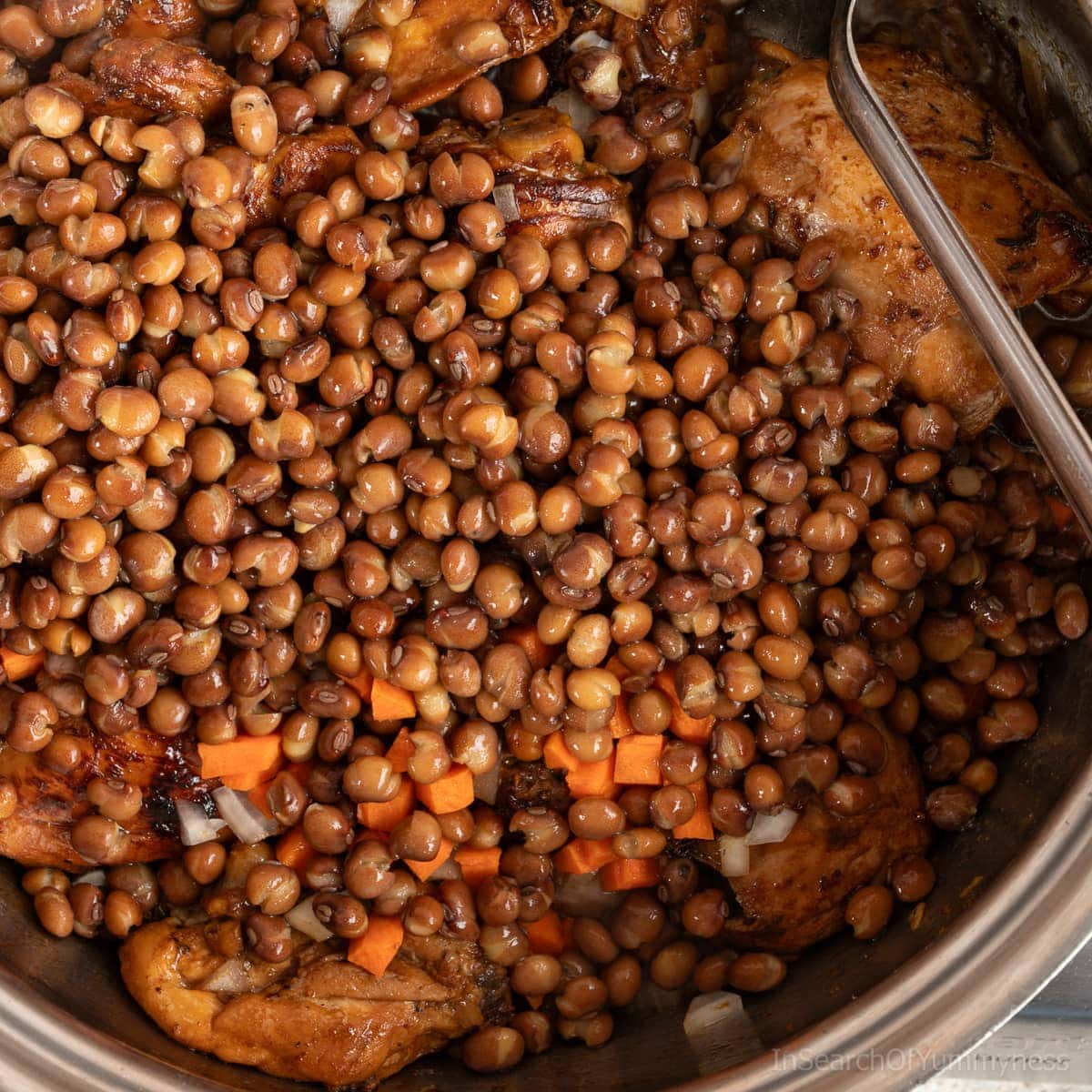
Step 4: Add the onion, carrot and pigeon peas to the pot. Cook for about 5 minutes, stirring occasionally.
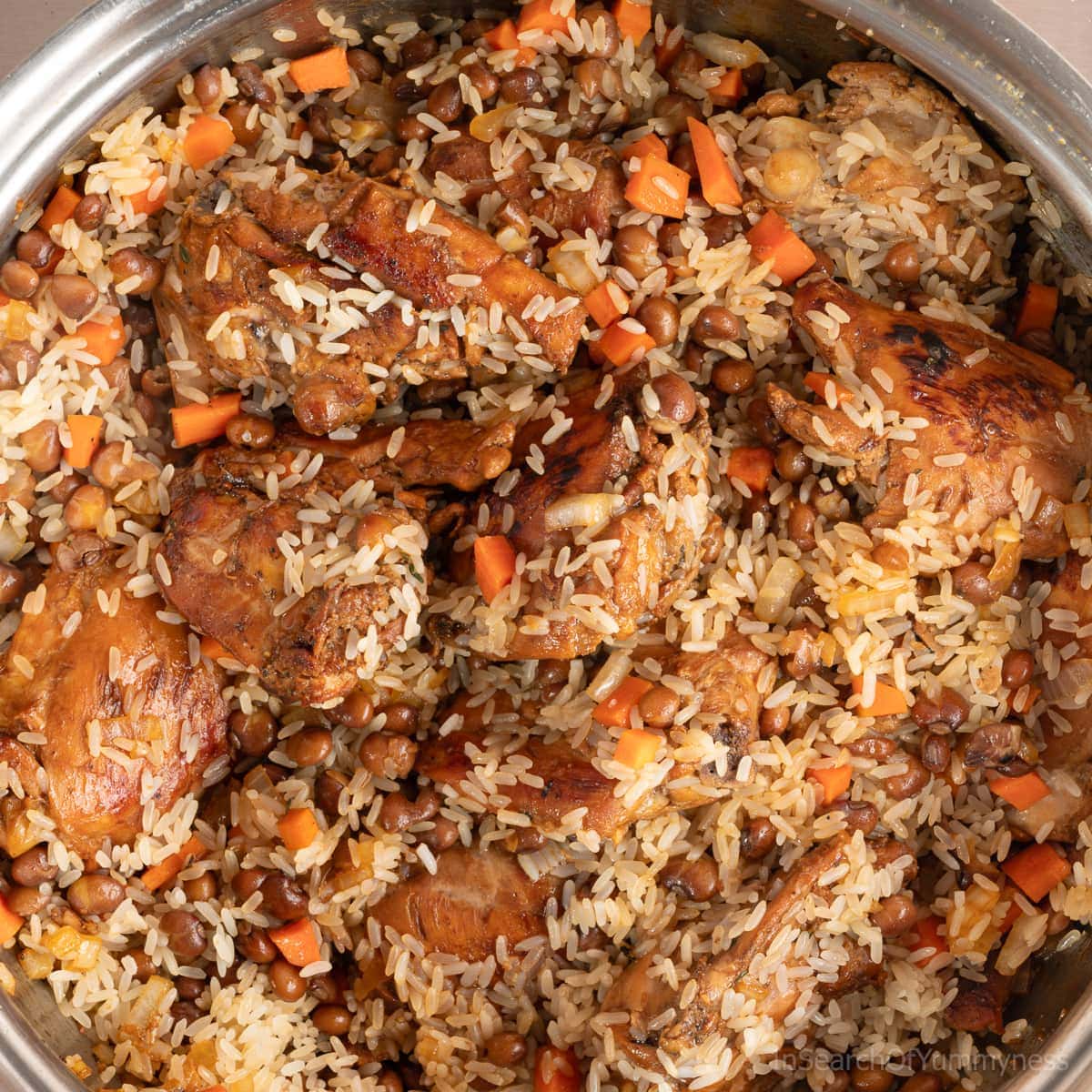
Step 5: Add the rice and stir well to combine.
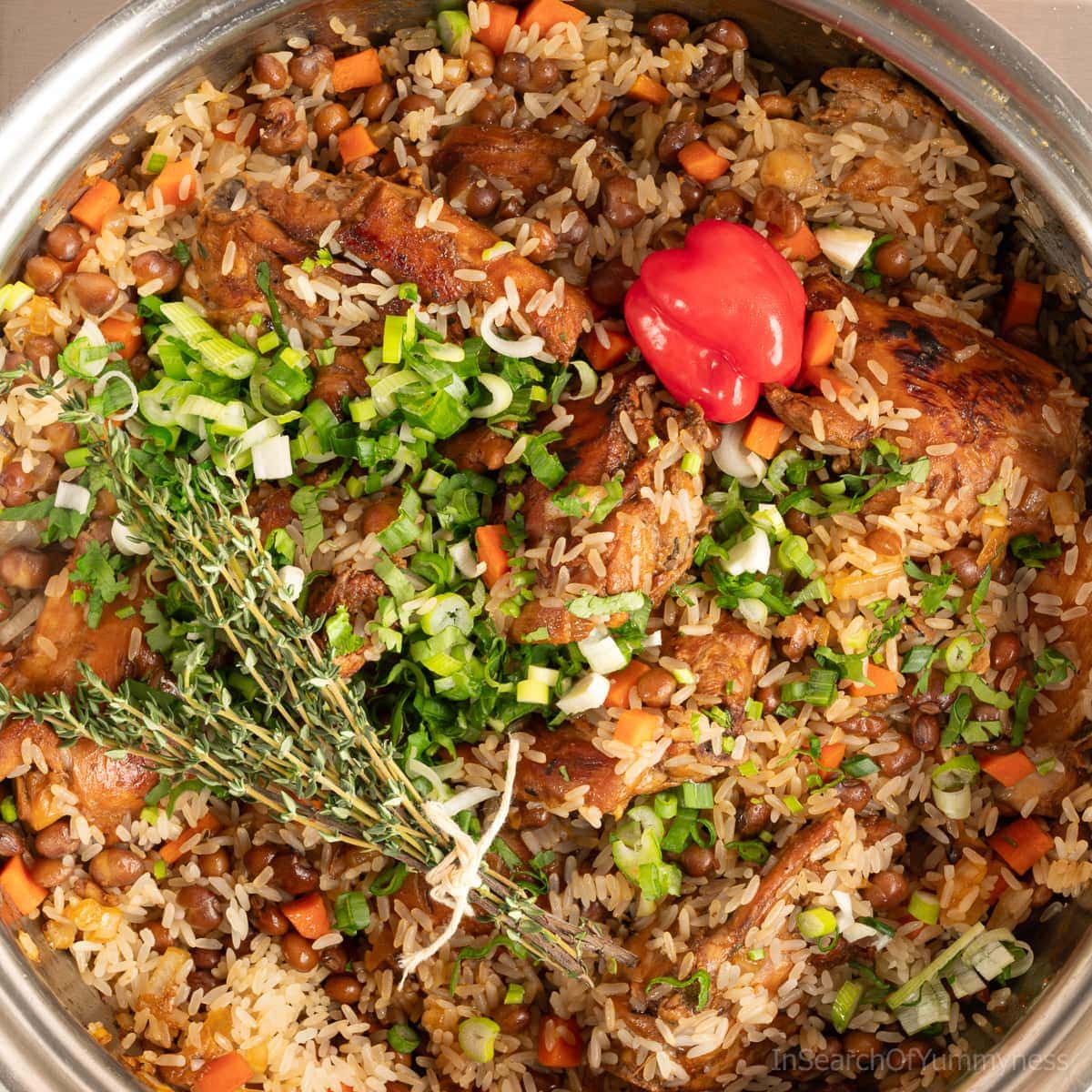
Step 6: Add the cilantro, green onion, remaining thyme sprigs and a whole Scotch Bonnet pepper. Cook another 5 minutes.
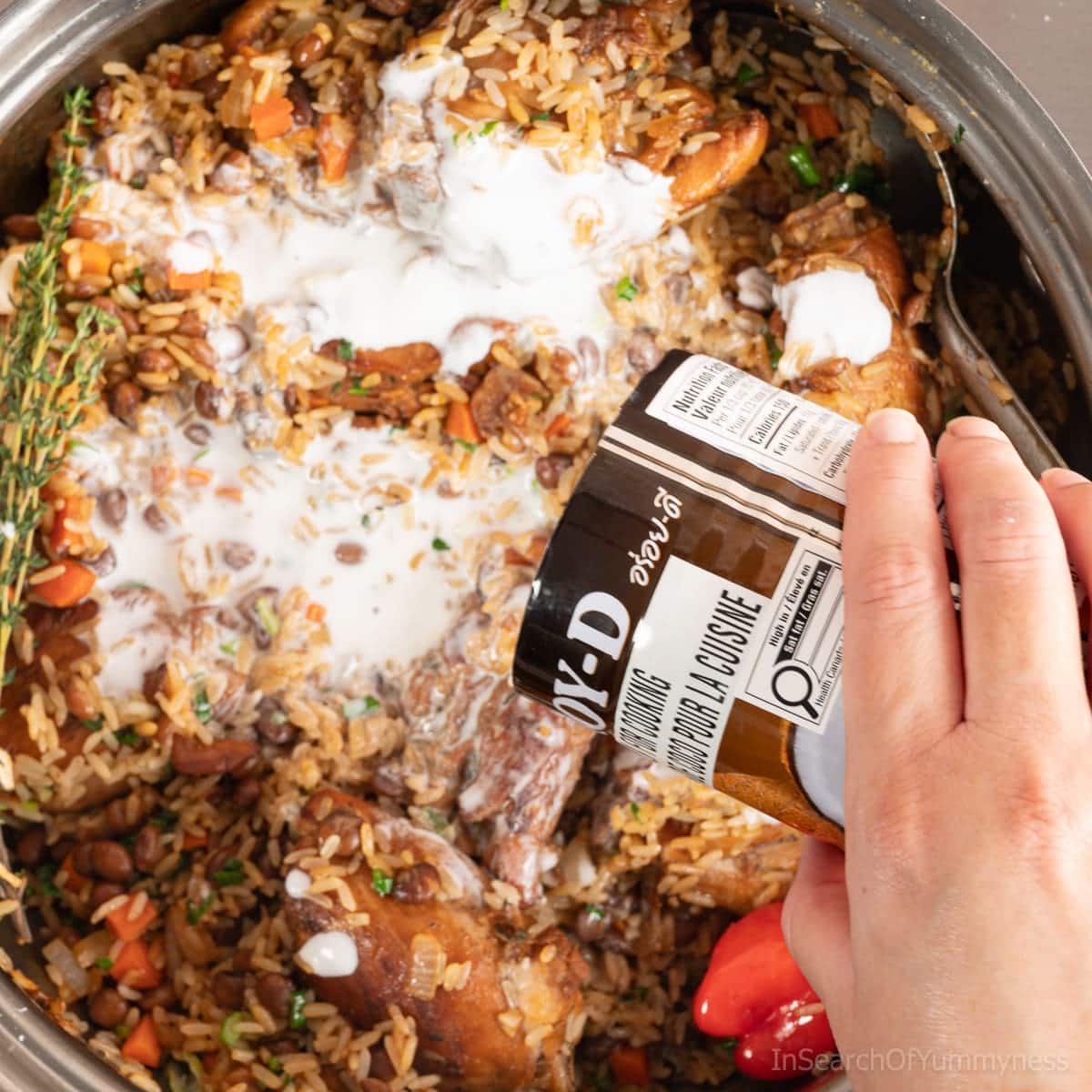
Step 7: Pour in the coconut milk and chicken stock. Scrape up any brown bits from the bottom of the pot.
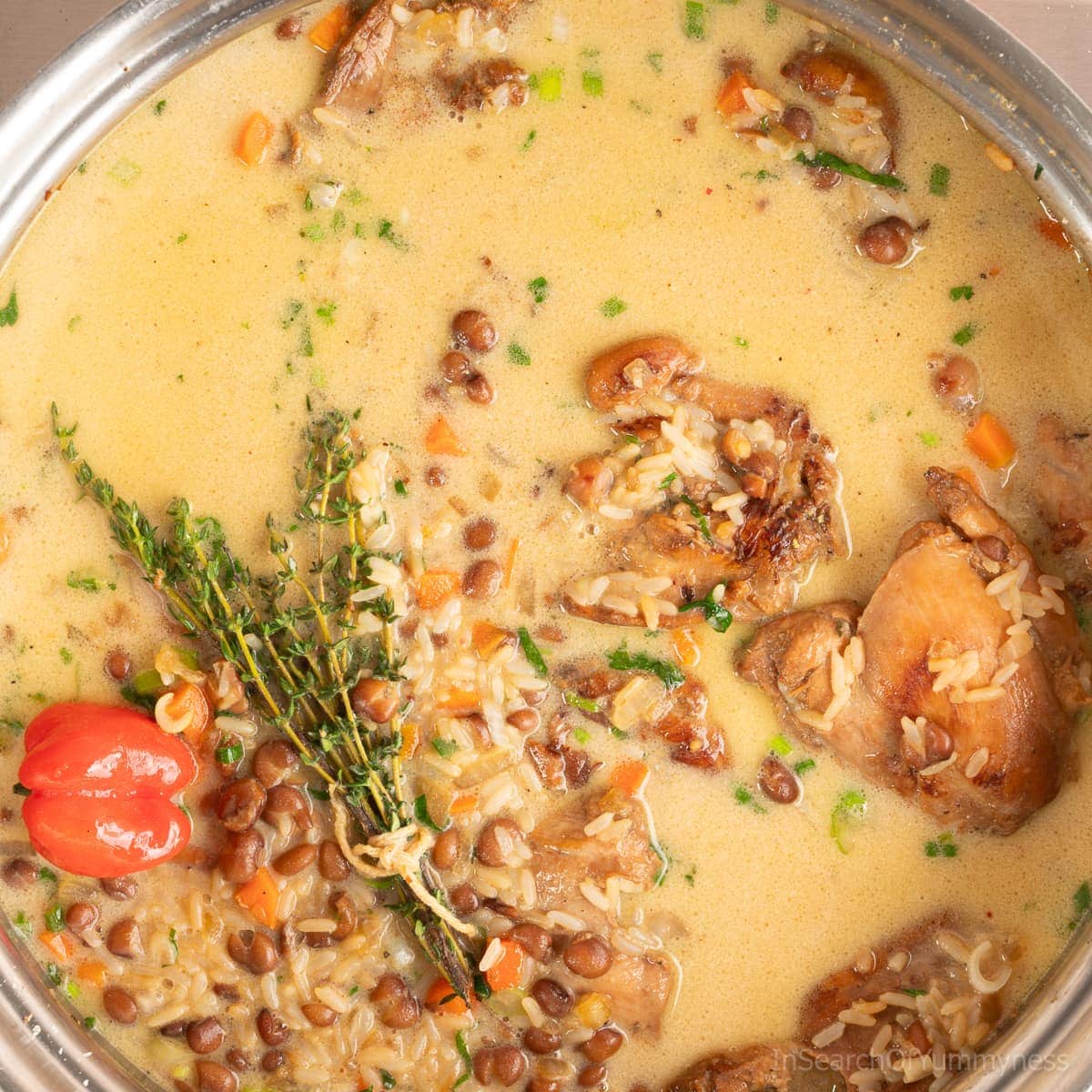
Step 8: Add the remaining salt and more black pepper. Stir, then reduce the heat to medium-low, cover and cook for 20-25 minutes.
How to Serve Chicken Pelau
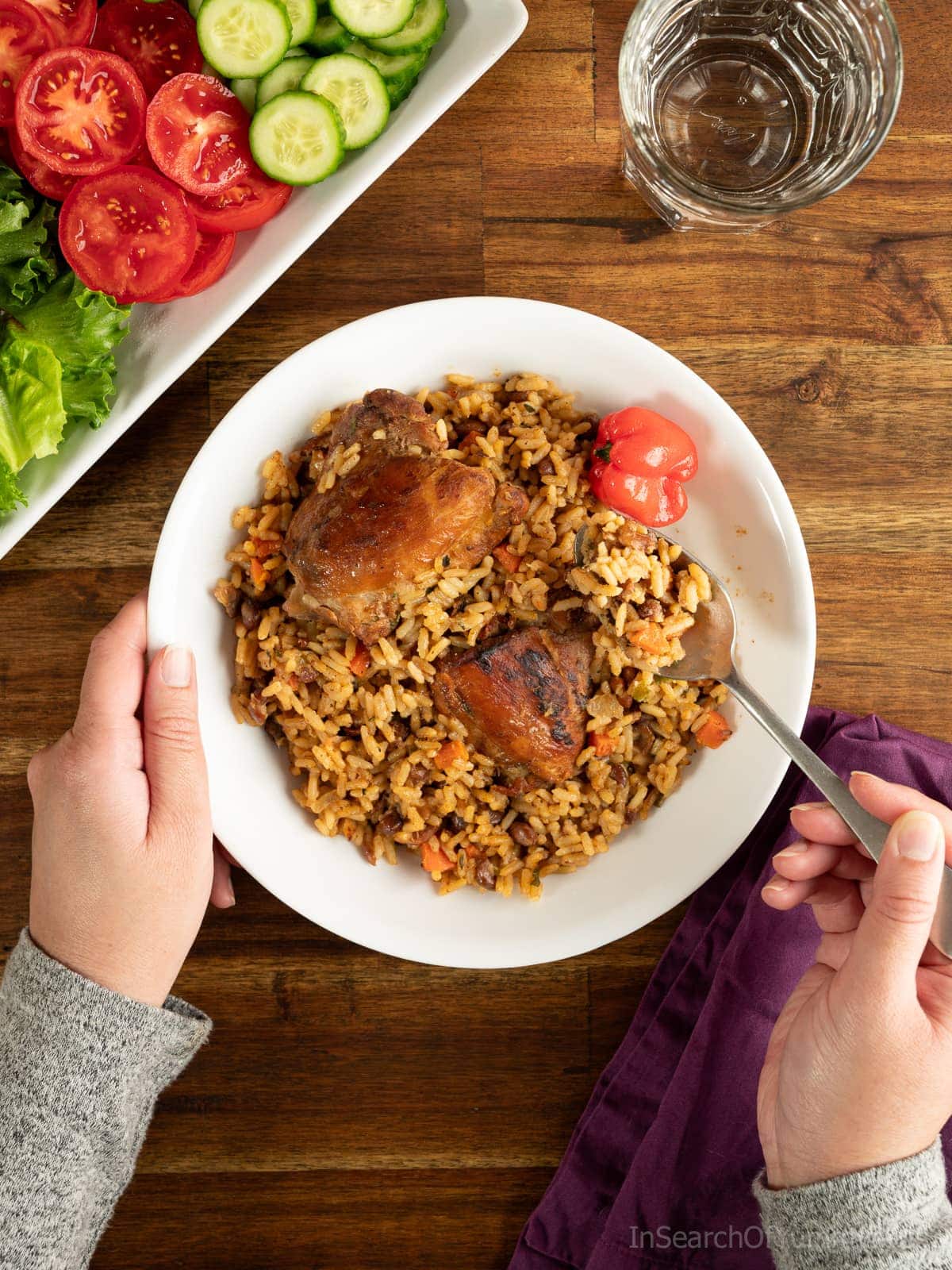
Pelau is typically served as a complete meal on its own, but Trinidadians often pair it with:
- A simple green salad with tomatoes and cucumbers. Sometimes we add shredded carrots, too.
- Coleslaw or a crisp watercress salad.
- Slices of avocado.
- Homemade hot pepper sauce on the side.
- Kuchela (a spicy mango pickle condiment).
- Coconut chutney or tamarind chutney,
- A cold drink like coconut water, ginger beer, or sorrel.
In Trinidad, pelau is popular for casual gatherings, weekend meals, and anytime you need to feed a crowd.
Make Ahead & Storage
- Pelau reheats well, which makes it a great option for meal prep or entertaining.
- Leftovers keep well in the fridge for up to 3 days.
- For longer storage, freeze portions in airtight containers for up to 1 month. Thaw in the fridge overnight before reheating.
Tips for Success
- Don't worry if the rice sticks to the bottom of the pot. That crispy caramelized rice is called "bun bun" and many people say it's the best part of the dish.
- Use a heavy-bottomed pot with a tight-fitting lid to ensure even cooking.
- Resist the urge to stir too often once the liquid is added. You want the rice to steam and not become mushy.
- If you notice the rice is still undercooked after 20 minutes, add a splash more water and continue cooking.
- If your rice is cooked but there's too much liquid in the pot, remove the lid and continue cooking for about 5 more minutes.
Common Questions
Use canned coconut milk, or the kind sold in a carton beside the cans. These versions are richer and higher in fat, which gives the rice a creamy texture.
Avoid coconut milk meant for drinking, as it's much thinner and won't provide the same flavour or consistency.
If you can't find coconut milk, you can substitute creamed coconut (it's more concentrated) or coconut cream. Just dilute either of them with a bit of water before using.
While people call it "burnt" sugar, you don't actually want to make your sugar black! It would be very bitter and very unpleasant to eat.
What you're looking for is a deep caramelization of the sugar, which does have a tiny bit of bitterness to it, but ultimately adds complexity to the overall flavour of the dish.
This usually means the heat was too low, so it cooked for too long. Try increasing the heat slightly. The type of rice matters too. Parboiled long-grain rice works best.
More Trinidadian Recipes You'll Love
Recipe Card
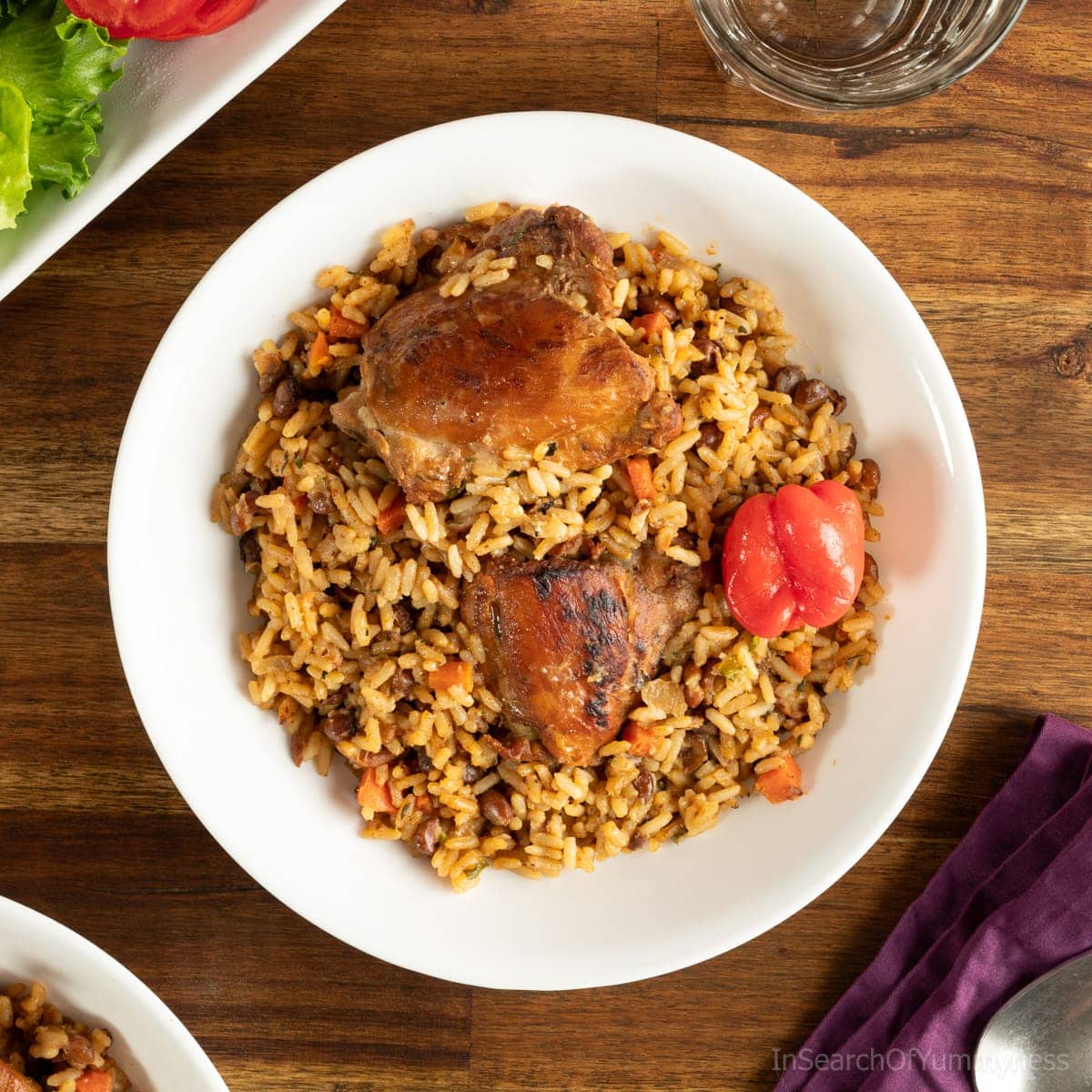
Trinidad Pelau with Chicken and Pigeon Peas
Ingredients
To Season the Chicken
- 2 ½ pounds chicken thighs, bone-in (or chicken legs)
- 1 sprig fresh thyme, leaves only (don't use the stem)
- 4 cloves garlic, minced (or grated on a fine rasp grater)
- ½ teaspoons salt
- ¼ teaspoon black pepper
For the Pelau
- 2 tablespoons vegetable oil
- 1 tablespoon brown sugar
- ½ cup chopped onion, (about ½ of a medium onion)
- ½ cup diced carrot, about 1 carrot
- 19 ounces canned dry pigeon peas, rinsed and drained (1 can)
- 2 cups long-grain parboiled rice, washed and drained
- 1 tablespoon cilantro, finely chopped
- ¼ cup green onion, thinly sliced
- 2 sprigs fresh thyme
- 1 Scotch bonnet pepper, optional, see note
- 7 ounces coconut milk, (about ½ of a 14 ounce can of coconut milk)
- 3 cups low-sodium chicken stock, or hot water
- 1 teaspoon Golden Ray margarine, optional
- 1 teaspoon salt
- black pepper, add more black pepper, to taste
Equipment
- Large heavy-bottom pot, or Dutch oven
Instructions
Season the Chicken
- Place the chicken in a large bowl. Add the leaves from one thyme sprig, garlic, ½ teaspoon of salt, and black pepper. Stir to coat the chicken with the seasonings.
- Optional: Cover with plastic wrap and refrigerate overnight for more flavour.
Make the Pelau
- Pour oil into a large heavy-bottomed pot and place it over medium heat. When the oil is hot, sprinkle the brown sugar in an even layer.Allow the sugar to melt and caramelize without stirring it. Watch closely for the sugar to turn deep brown colour.
- Carefully add the seasoned chicken to the pot. If using chicken with skin, add it skin-side down.(⚠️ Be cautious: hot sugar can splatter when the chicken is added!)Cook for 2 minutes, then stir to coat the pieces in the caramelized sugar. Cook for about 5 minutes, turning occasionally, until the chicken is browned on all sides.
- Add the onion, carrot, and pigeon peas. Continue cooking over medium heat for 5 minutes, stirring occasionally, until the onion starts to soften.
- Add the rice and stir to combine. Mix in the cilantro, green onion, remaining whole thyme sprigs, and whole Scotch bonnet pepper. Cook for 5 minutes, stirring occasionally
- Pour in the coconut milk and chicken stock. Scrape up any browned bits from the bottom of the pot. Add the remaining 1 teaspoon salt and a pinch of black pepper. Stir gently to combine.Reduce heat to medium-low, cover, and cook for 20-25 minutes, or until the rice is tender and the liquid is absorbed to your liking
- Remove from heat and discard the thyme sprigs. Stir in Golden Ray margarine, if using.Fluff the rice gently with a fork. Serve hot or at room temperature.
Want More Recipes Like This One?
(You can easily unsubscribe at any time)
Notes
- Rice: Use a long-grain parboiled rice. Brands like Mr. Goudas Long Grain Parboiled Rice or Uncle Ben's Long Grain Converted White Rice (also parboiled) work well. Other rices, like basmati or short-grain rice, will become mushy.
- Green seasoning: This recipe uses green onion, thyme, cilantro, and garlic to mimic the flavour of green seasoning. If you have green seasoning, you can use it to season the chicken. I would have added Shado beni (bandhania) to my recipe, but it can be hard to find fresh here in Canada.
- Burnt sugar: Although we call it "burnt sugar," you don't actually want to burn it! Caramelize the sugar until it's a deep amber colour. Don't let it turn black, or it will taste very bitter.
- Coconut milk: Use canned coconut milk (or the kind sold in cartons beside the cans), not the drinking kind (it's too watery). If you can't find coconut milk, use creamed coconut or dilute coconut cream with water.
- Pigeon peas: I have tested this recipe with both canned green and canned dry pigeon peas. Use whichever you prefer.
- Flavour options: Add ketchup or tomatoes for tang and colour, or pumpkin/butternut squash for sweetness. Add any of these to the pot after adding the rice.
- Scotch bonnet pepper: I like to cook mine whole to get some of the flavour in the dish, without making it too spicy. For a moderately spicy flavour, pierce the pepper once before adding it to the pot. If you want your pelau to be extra spicy, slice the cooked pepper and serve it with the pelau, or dice the raw pepper and add it to the uncooked rice. For a mild dish, skip the hot pepper entirely. Note that Scotch Bonnet peppers are VERY spicy. I recommend that you wear gloves when handling them, and be sure to wash your hands well afterwards.
- Golden Ray margarine: Add a small amount at the end of cooking for authentic flavour (optional).
- Pelau Texture: If you prefer a looser pelau, don't let all of the moisture absorb before removing it from the heat. Check to make sure the rice is cooked through, and then remove it. If you prefer a drier pelau, you can cook out all of the liquid.
- Food safety: Cook chicken to 165°F (74°C) before serving.
- Storage: Keeps 3 days in the fridge or 1 month in the freezer. Reheat gently with a splash of water or stock, if needed.
Please read the full blog post for all of my tips, variations, and recommendations for this recipe.
Nutrition
Nutritional information is an estimate provided as a courtesy and will vary based on the specific ingredients used. For exact values, use your preferred nutritional calculator with the products you're using.
Private Notes
Have you made this recipe?
Let us know how it turned out in the comments!About Shareba
Shareba Abdul is a recipe developer and food photographer with a Culinary Arts certificate from George Brown College and 15+ years of experience creating and testing recipes for home cooks. She is also a member of the International Association for Culinary Professionals and tests every recipe on this website in her own kitchen. Learn more →

Erica says
The taste is great but I found that the rice got mushy! I think there's too much fluid, next time I make it I will try using a bit less.
Shareba Abdul says
Hey Erica, I'm sorry to hear that the rice became mushy for you. It's possible that your stovetop is less hot than mine on medium-low heat (it varies from appliance to appliance). You could try reducing the amount of liquid next time, or turning up the heat a bit more. You could also try taking the lid off earlier. I hope this helps!
Erica says
It's still very tasty - just not the pelau I'm used to! As it turns out I also used a different kind of rice than the one specified. All changes to make for next time!
Shareba Abdul says
Oh that's good to know! And I'm glad that you still enjoyed the flavour 🙂