

Sorrel, also known as Roselle or Hibiscus sabdariffa, is a tangy, ruby-red ingredient with a bright, fruity flavour that's pleasantly tart, a little like cranberries crossed with lemon.
If you've ever sipped a glass of Caribbean sorrel drink, you already know how good this ingredient can be. But there's a lot more to it than that one classic recipe.
Read on to learn exactly what sorrel hibiscus is, where to find it, and how to use it in your kitchen.
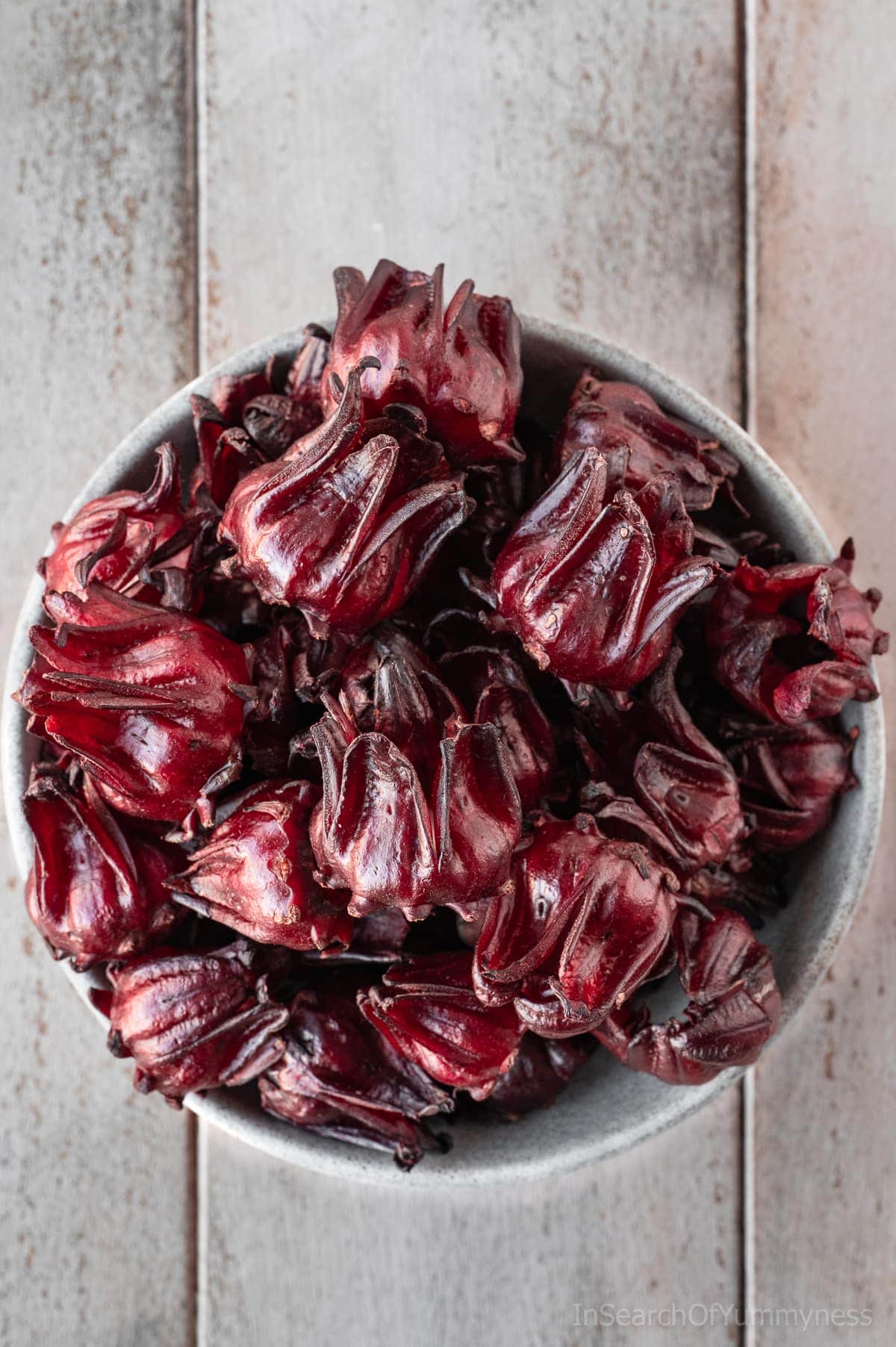
What is Sorrel?
These vibrant red buds go by many names. You might see them labelled as Jamaican sorrel, Caribbean sorrel, red sorrel, or simply roselle.
They all refer to the same thing: the calyxes (the fleshy, cup-shaped parts that enclose the flower) of a hibiscus plant called Roselle, known botanically as Hibiscus sabdariffa.
It's worth noting that there is a leafy green herb also called sorrel, but that plant is completely unrelated to this one.
If you're looking for the ruby-red buds used in Caribbean cooking, make sure you're searching for roselle or hibiscus sorrel specifically.
The calyxes are what get steeped in hot water to make drinks and flavour recipes. In all of my cooking experience with this ingredient, the preparation is the same: you boil or simmer the calyxes in water, then use the deeply coloured, tangy liquid in whatever you're making.
I'm Trinidadian, and we make a spiced beverage called Sorrel. It's popular throughout the Caribbean and is a staple at Christmastime.
What Does It Taste Like?
Sorrel has a bright, tart flavour that's often compared to cranberry or hibiscus tea, with a distinct citrusy quality similar to lemon. It's pleasantly acidic without being overwhelmingly sharp, and when sweetened, it becomes fruity and very refreshing.
The flavour deepens when you simmer the buds in water, pulling out their rich colour and characteristic tanginess. Once you get that tart-sweet balance right, the rest comes together easily.
Fresh vs. Dried Sorrel
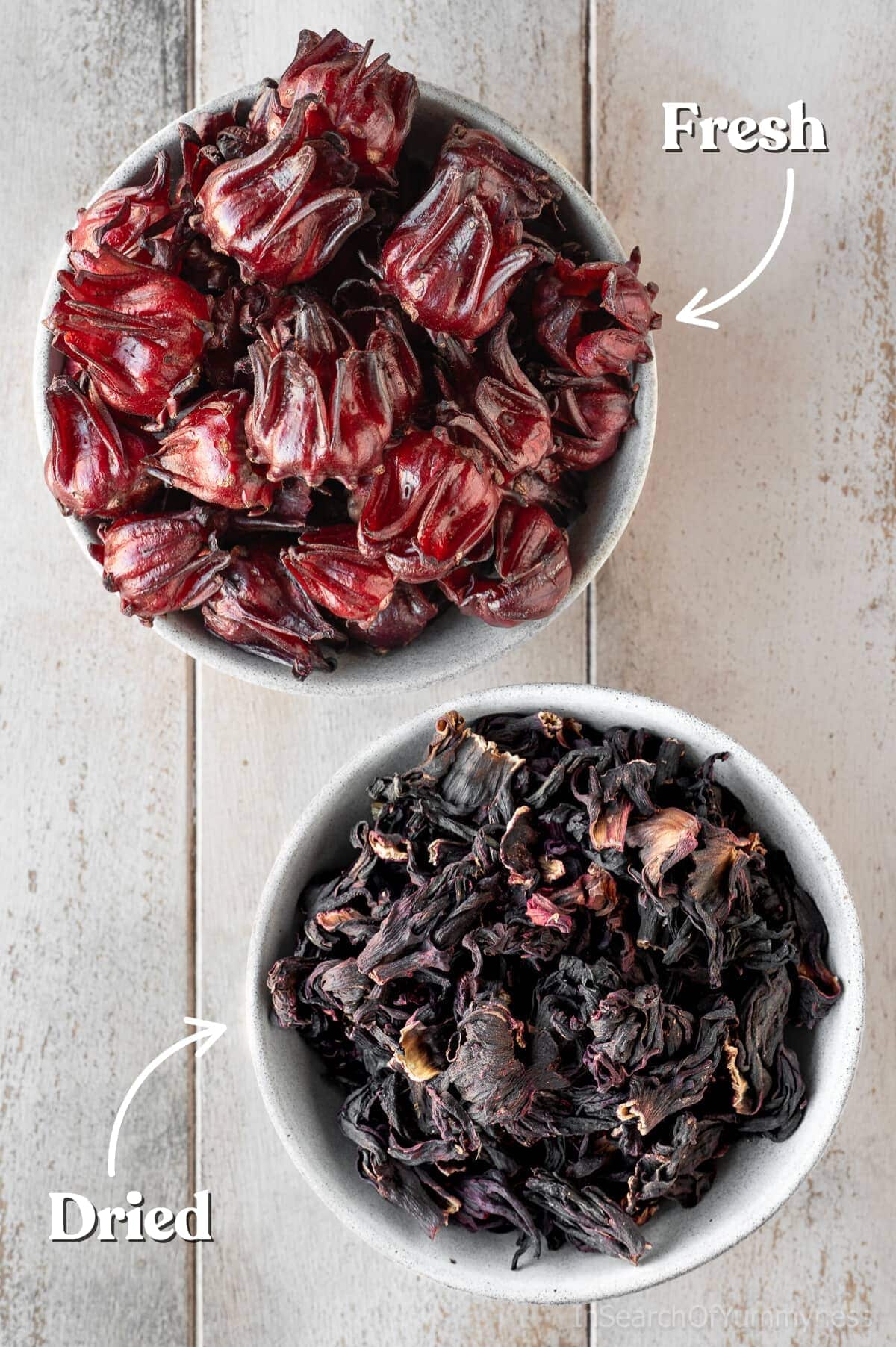
Sorrel is available in both fresh and dried forms, and which one you use will depend on what you can find and when.
Fresh sorrel has a vibrant flavour and a beautiful deep red colour, but it's delicate. It can go mouldy quickly, so keep it refrigerated and use it within a few days of purchase. In places like Ontario, Canada, fresh sorrel typically only appears in stores around Christmastime.
Dried sorrel is easier to find year-round and stores for a long time in a cool, dry spot. For most recipes, dried sorrel works just as well as fresh. Worth noting: some brands sell broken pieces rather than whole buds. Since you're steeping and then discarding the buds anyway, this doesn't really affect your end result.
Substituting Fresh for Dried
If you have fresh sorrel and a recipe calls for dried, you'll need roughly twice the amount. For example, if a recipe calls for 2 cups of dried sorrel, use about 4 cups of fresh.
Where to Buy Sorrel?
Your best bet for finding sorrel is a Caribbean or West Indian grocery store, where it's often stocked year-round in dried form.
Some larger mainstream grocery stores carry it as well, particularly in areas with a large Caribbean community.
You can also purchase dried sorrel online from retailers like Amazon. Look for well-known Caribbean brands for reliable quality.

How to Use Sorrel
The most common preparation is to steep or simmer the buds in water, then use the resulting deep crimson liquid as the base for drinks and other recipes.
Caribbean Sorrel Drink
This is the most iconic use of sorrel, and it's easy to see why. The tangy, spice-infused beverage is made across the Caribbean, and every family has their own version.
Mine is Trinidadian, and you can find my full recipe here: Caribbean Sorrel Drink.
Hibiscus Tea and Cold Drinks
A simple sorrel steep makes a refreshing iced tea. Try simmering about 2 cups of dried sorrel in 10 cups of water for around 10 minutes, then let it cool completely.
Sweeten with sugar, honey, or agave to balance the tartness, and serve over ice. You can also use the liquid as the base for fruit punch or homemade popsicles.
The fruity, lemon-like flavour is especially welcome in warm weather. Just be sure to add enough sweetener to round out the acidity.
Agua de Jamaica
In Mexico, a very similar drink called Agua de Jamaica is made from hibiscus, and it tastes a lot like a fruity lemonade. If you've tried it before, the flavour of sorrel will be very familiar.
In Baking and Desserts
A fellow food blogger once told me she uses sorrel to colour and flavour marshmallows and Swiss meringue buttercream. I haven't tried it myself, but the idea makes a lot of sense.
The natural pigment in sorrel turns liquids a deep pinkish-red, and that tanginess would be a lovely contrast against something sweet.

IMPORTANT SAFETY INFORMATION
Not all hibiscus plants are safe to eat or drink. The Hibiscus sabdariffa variety is the one used for edible preparations. Please do not attempt to make tea or food from a hibiscus plant in your garden unless you know for certain that it is Hibiscus sabdariffa and it was sold as safe for human consumption.
If you are on any medications (including blood pressure medication), speak to your doctor before consuming hibiscus regularly, as it may interact with certain drugs.
This article was originally published on December 20, 2017. It has since been updated with new photos and information.

Feebee says
HI, I have fresh roselle, but your recipe talks about dried. How can I use the fresh roselle?
Shareba says
Hi Feebee, if you're making Sorrel Drink from the roselle, you will need at least twice the amount. My recipe calls for 2 cups of dried, so you'd need to use about 4 cups of fresh. Make sure to keep the fresh roselle in the fridge until you're ready to use it, as they can get mouldy quickly. I hope this helps!
Sonia says
Thank you so very much ma cher. Be safe, and enjoy the holidays----safely
Shareba says
You too!
Miriam says
Is Hibiscus flower the same as Sorrell? They look very similar in appearance
Shareba says
Hi Miriam, sorrel is a type of hibiscus plant. Sorrel is the common name given to the sepals of a specific hibiscus plant called Roselle, or Hibiscus sabdariffa. I hope this helps!
Sonia says
I have many hibiscus trees in my yard. Some petals open on one variety, others fall while still closed. The sorrel I know in Jamaica is completely different. Can the flowers of my decorative hibiscus be used for tea? Don't want to poison myself😁
Shareba says
Hi Sonia, that's a good question. While sorrel is a type of hibiscus (Roselle), not all types of hibiscus plants are safe to consume. Hibiscus tea is made from the Hibiscus Sabdariffa variety, which is the proper name for Roselle. If you don't know exactly what variety you are growing, I wouldn't try making tea out of it. You'd need to consult a professional who can identify the plant and let you know if it's safe to use or not. I hope that helps!
tony benson says
Shareba . I live in Uk . and just bought dried sorrel marked as tropical in a packet from a local shop and am going to use in tea with honey . currently i take Simvastatiin for bad cholestol and have marginally high blood pressure so i have medication everyday. one tablet
I hope i can boil or simmer for a few minutes and drink one tea per day with honey and I wonder if there is any irrefutable evidence about how good it is for reducing bad cholesterol and lowering blood pressure .
Also can i grow this hibiscus successfully . in UK
We have a d family plot in Kenya Africa on the equator I am sure I can grow his flower successfully as Jamaica is similarly tropical
Shareba says
Hi Tony, while I think the sorrel should make a nice tea, I unfortunately don't have any information on the medicinal benefits of the plant. You should consult your doctor or a medical professional in your area for that information. As for growing it, it may do well in the UK in a temperature controlled greenhouse as it is a tropical plant. It should be ok in Africa's climate though.
Olusola Parker says
Thanks. I now know what to do with my Sorrel fruits.
Shareba says
Happy to help!